Appliance
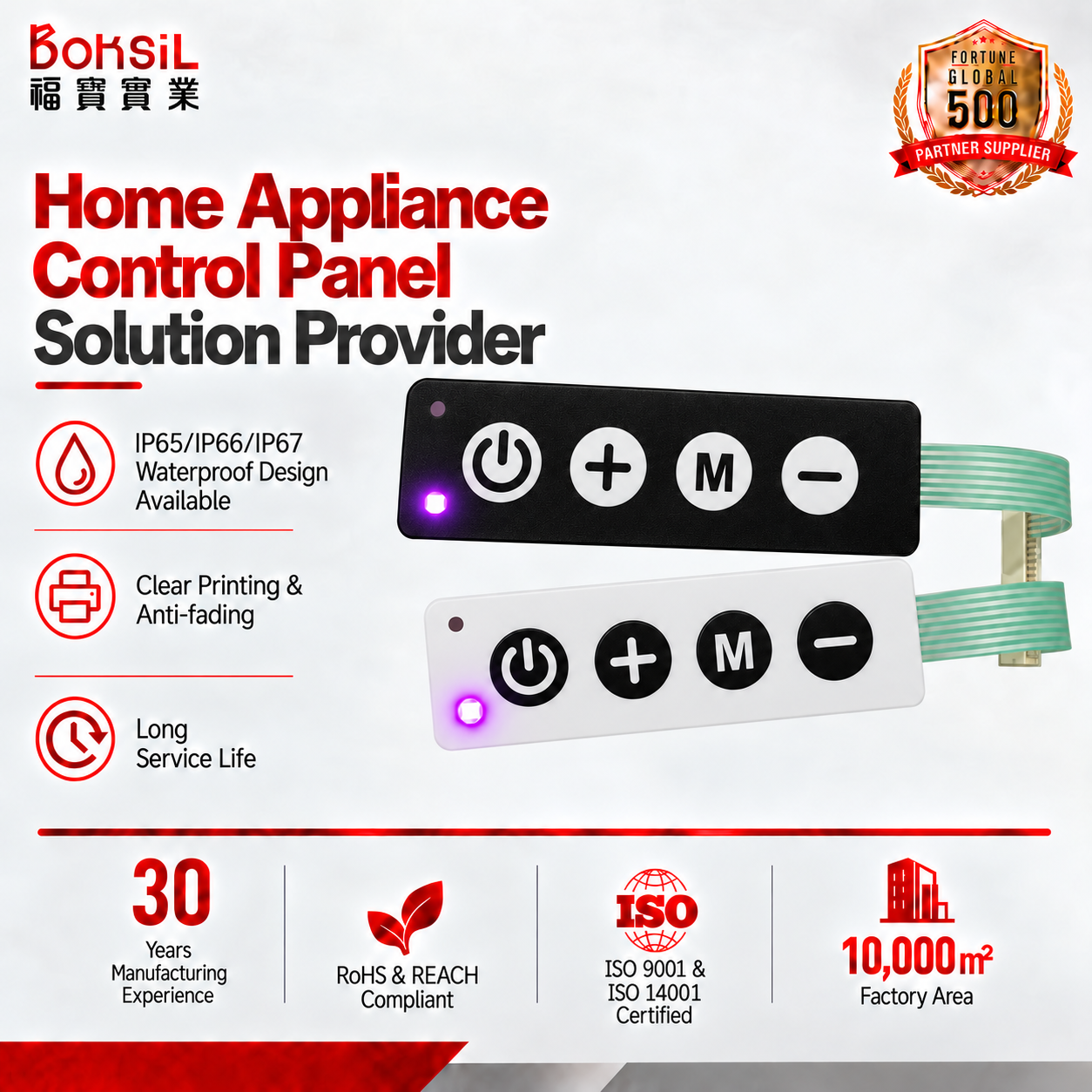
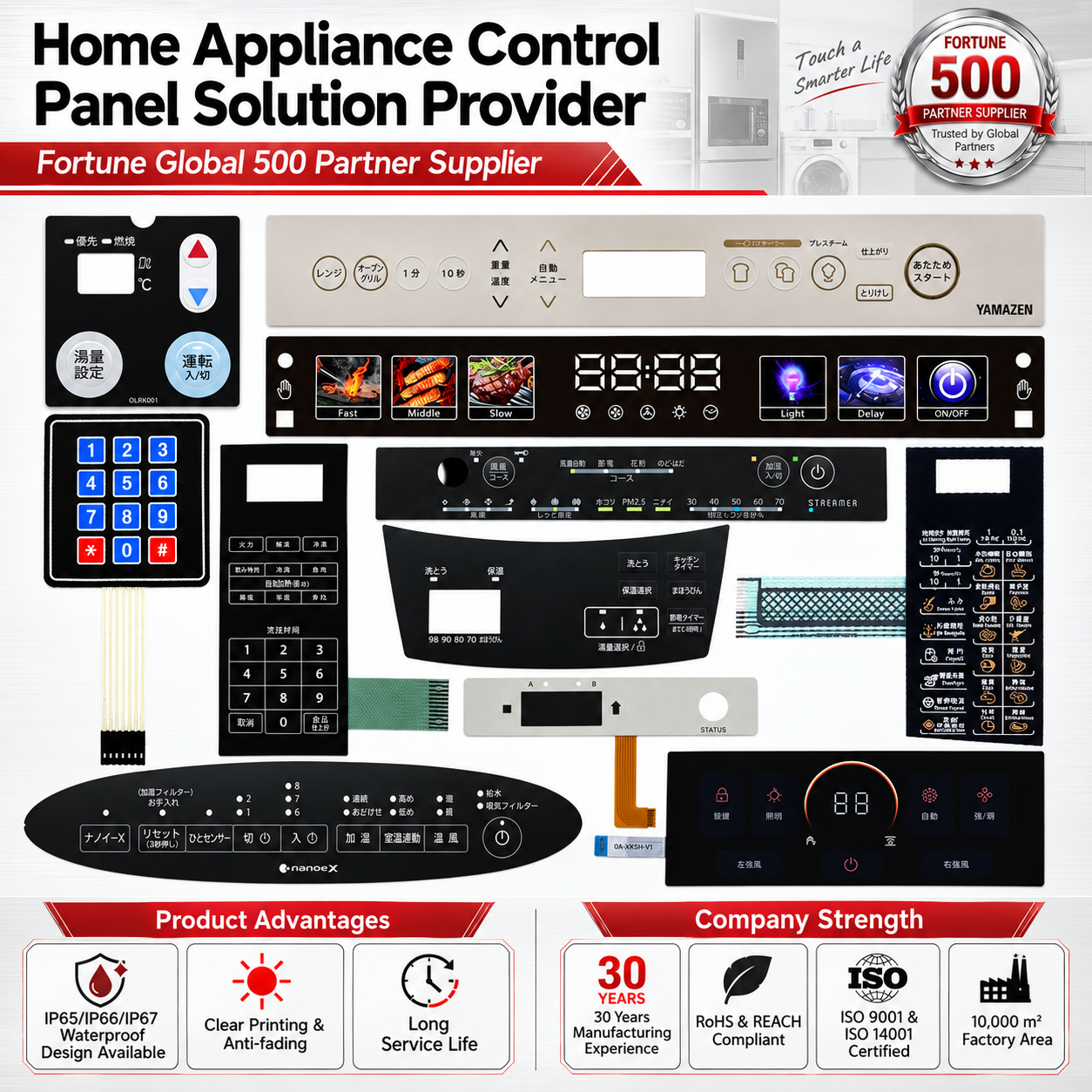
4 Button LED Lights Metal Domes Tactile Button Membrane Switch for Home Appliance
- Actuation Force: 280g - 350g Tactile
- Circuit Carrier: Silver Ink / PET
- Integrated Optics: SMD 0805 LEDs
Custom fabricated to micron-level mechanical tolerances, featuring low electrical trace impedance, long actuation lifetimes, and tailored IP65-IP68 environmental ingress barriers.
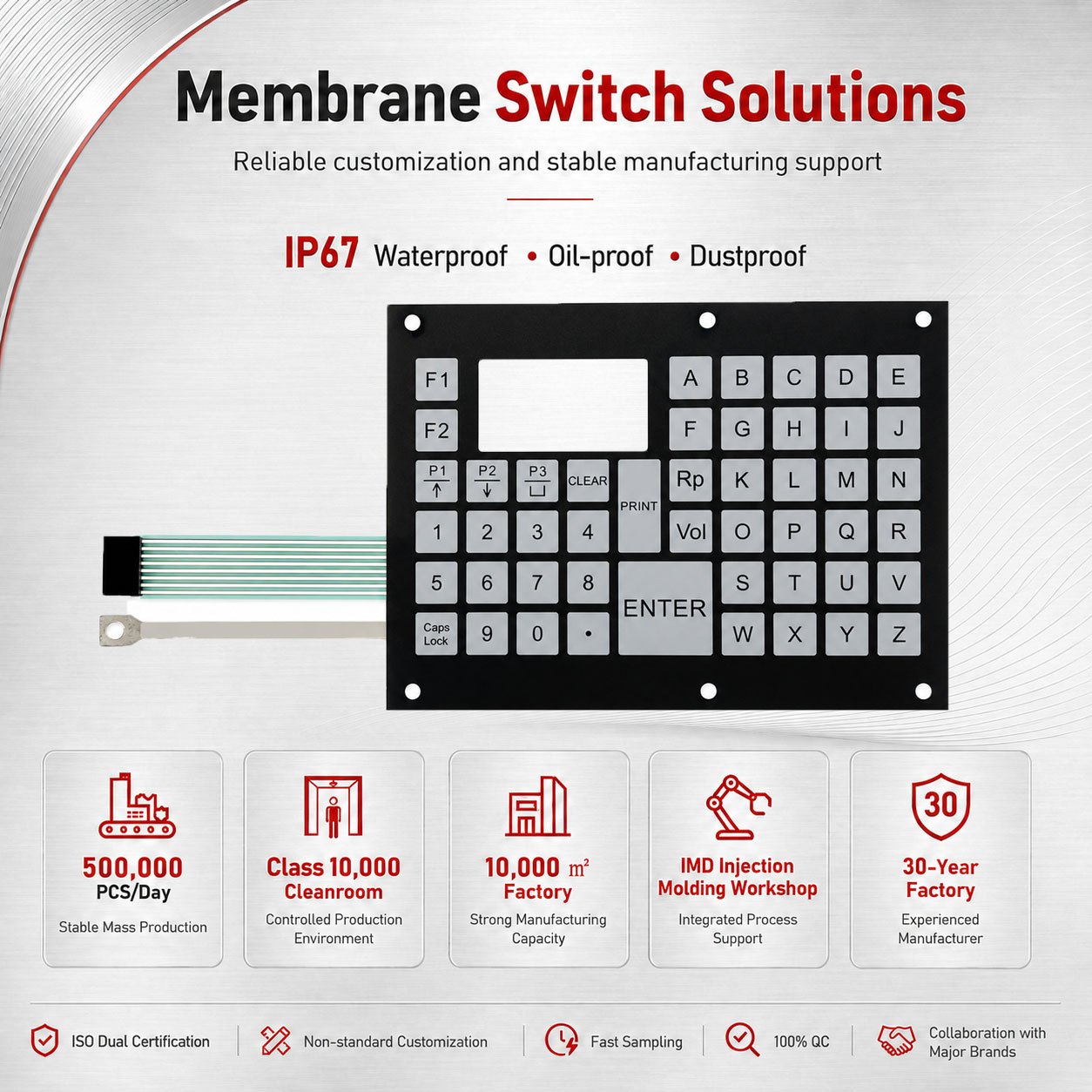
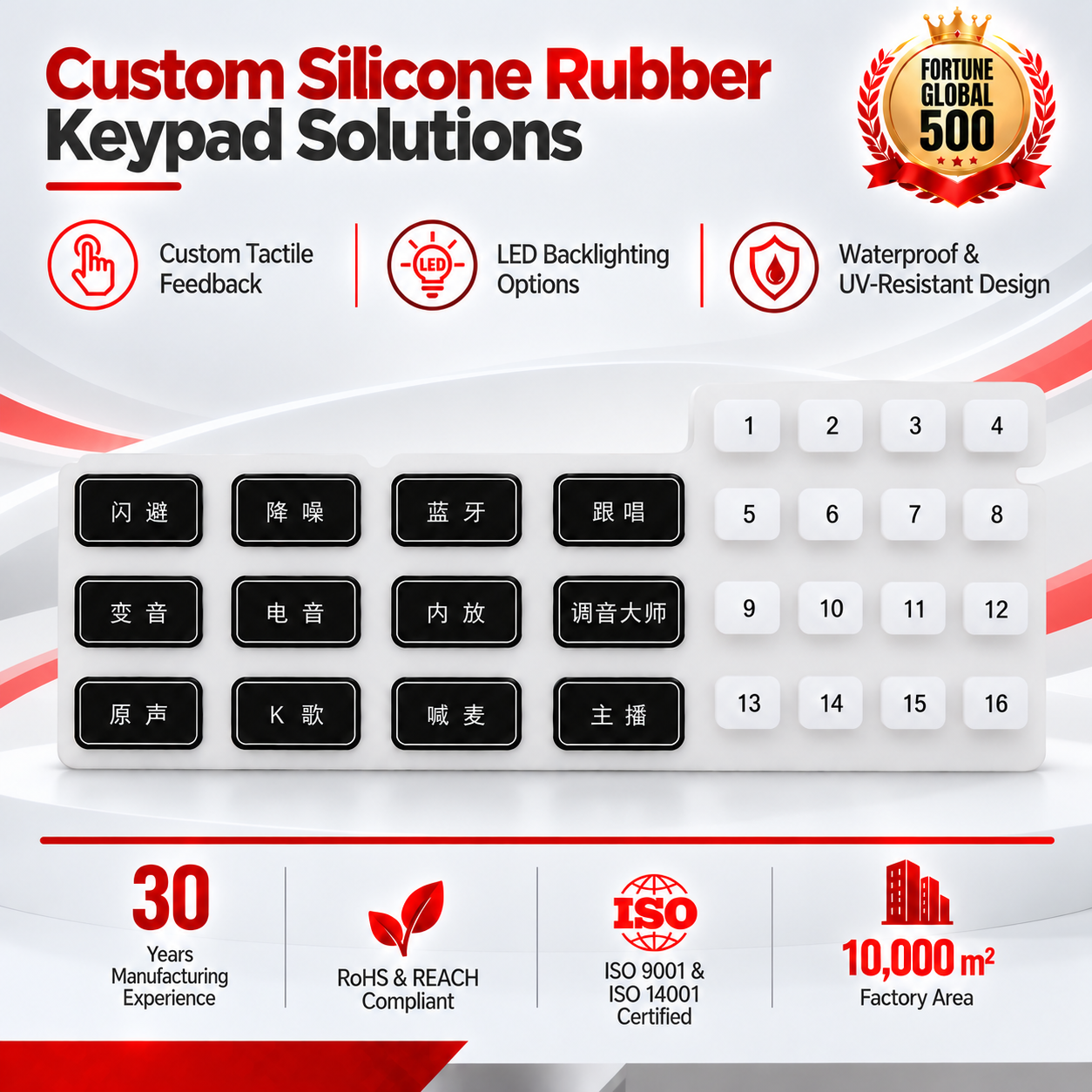
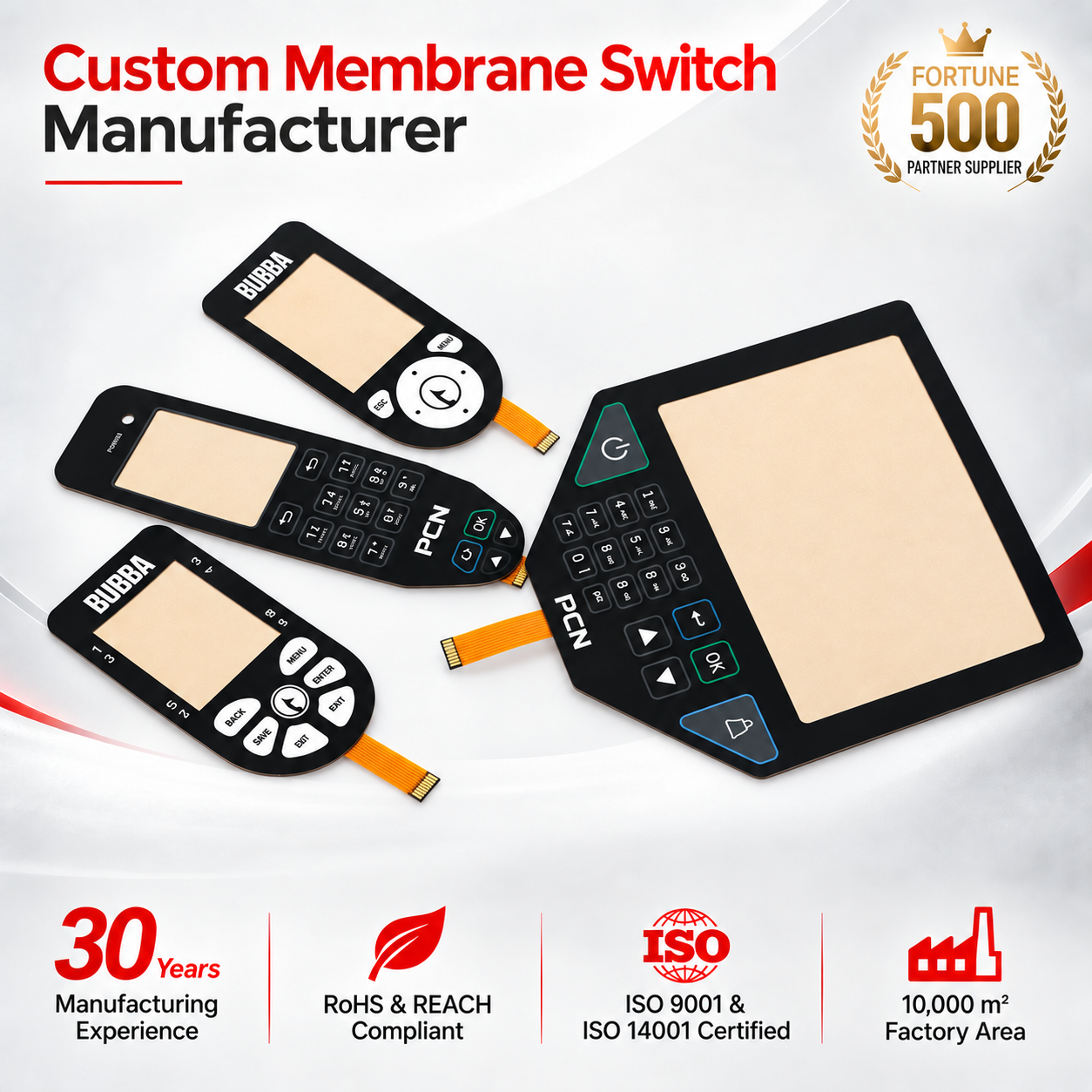
A rigorous inspection into layer stack-up physics, conductive ink metallurgy, trace routing parameters, and dynamic actuation kinematics for B2B procurement and systems design engineers.
The industrial membrane switch is a precision electromechanical stack-up built from stratified polymeric films, structural adhesives, conductive print circuits, and tactile actuation arrays. At the foundational layer, modern human-machine interface (HMI) modules avoid brittle mechanical toggles in favor of flexible polyester (PET) or polyimide (PI) sheets coated with conductive precious metal particulates.
In harsh working environments, premature switch failure typically stems not from surface abrasion, but from internal micro-fractures within conductive silver paths or moisture ingress through adhesive perimeters. To mitigate trace shear stress under mechanical deflection, our circuits maintain trace radii exceeding 0.5mm, strictly avoiding 90-degree right angles that provoke stress-corrosion cracking and localized current crowding.
Specifying the circuit layer requires balancing electrical trace resistance, lifecycle flexibility, and overall Bill of Materials (BOM) cost. Screen-printed conductive silver ink represents the prevailing standard for cost-effective matrix routing:
| Layer Sequence | Material Designation | Thickness Specification | Primary Functional Purpose |
|---|---|---|---|
| 1. Graphic Overlay | Autotype Autotex PET / Lexan PC | 0.125mm – 0.250mm | Sub-surface screen/digital printing, chemical barrier, tactile embossing host |
| 2. Overlay Adhesive | 3M 467MP / 3M 200MP Series | 0.050mm – 0.125mm | Permanent, bubble-free bonding between graphic overlay and dome retainer |
| 3. Dome Retainer Spacer | Polyester film with die-cut vents | 0.075mm – 0.150mm | Precise pocket localization for stainless steel metal domes with breathing air channels |
| 4. Tactile Actuator | SUS301 Stainless Steel Domes | Custom Trip Forces (220g-450g) | Crisp snap-action tactile feedback, electrical momentary bridge across contact poles |
| 5. Circuit Layer | Silver Ink on PET or Etched Copper FPC | 0.075mm – 0.125mm | Signal propagation matrix, low-resistance traces, interconnect tail leads |
| 6. Rear Mounting Adhesive | 3M 468MP / 3M 300LSE (LSE Plastics) | 0.125mm – 0.200mm | Structural attachment to cast aluminum, stainless steel, or ABS equipment enclosures |
Tactile sensation is mathematically governed by the snap ratio formula: (F1 - F2) / F1 × 100%, where F1 is peak actuation trip force and F2 is switch contact force. Premium medical and industrial interfaces engineer this ratio between 45% and 65% to provide tactile confirmation through operator work gloves while avoiding mechanical finger fatigue.
Electromagnetic discharge can brick sensitive host microcontrollers. Integrating an internal solid or grid-patterned conductive carbon or aluminum foil ground plane diverts electrostatic discharges up to 15kV to earth ground through an independent grounding pin on the flex tail before arcs reach the sensitive signal bus.
Direct exposure to jet spray washdowns, cleaning chemicals, and outdoor condensation requires specialized continuous adhesive perimeter borders. Eliminating interior venting holes through the external perimeter and deploying internal labyrinth vent channels balances air pressure variations without exposing silver traces to external ambient air.
Next-generation user interfaces are evolving from static electromechanical switches into intelligent, illuminated, and aerodynamically molded smart surface devices.
The industry is transitioning toward 3D thermoformed structural electronics. By merging printed circuitry and surface-mount components directly inside the injection molding resin, IMSE eliminates conventional mechanical sub-assemblies. The result is a featherweight, monocoque structural interface characterized by zero moisture ingress pathways, seamless curves, and a thickness reduction of up to 70% compared to traditional bracketed housings.
Uneven, spotlight-heavy backlighting is being superseded by Light Guide Film (LGF) technology. Thin polycarbonate optical light guides with laser-etched micro-dot reflection patterns harvest light from edge-mounted side-fire SMD LEDs. This technique delivers ultra-uniform luminance across icons, logos, and dead-front alert legends with a profile thickness of less than 0.25mm, slashing overall system current draw from amps down to milliamps.
Post-pandemic healthcare standards demand overlays resilient to aggressive hospital-grade chemical disinfectants (isopropanol, quaternary ammonium, and bleach). Advanced textured polyester films infused with silver-ion antimicrobial agents inhibit 99.9% of bacterial colonization. Furthermore, nano-polyurethane elastomeric coatings afford micro-scratch self-healing capabilities, preventing micro-fissures where pathogens aggregate.
By blending the modern sleek aesthetic of solid-state capacitive touch with the positive confirmation of mechanical metal domes, hybrid panels offer the best of both paradigms. Non-critical functions (slider adjustment, numeric inputs) use capacitive sensing electrodes, while primary safety stops and power switches retain high-force stainless tactile domes for mission-critical tactile confirmation.
Traditional thermal ovens often yield high electrical trace resistance when printing conductive tracks on low-temperature plastic substrates. Advanced manufacturing incorporates Xenon pulsed light (photonic sintering) to instantaneously fuse silver nanoparticle inks. This achieves up to 60% of bulk copper electrical conductivity without imparting thermal deformation or stress upon precision polyester substrates.
The era of costly multi-week hard tooling for preliminary design verification is giving way to high-precision UV flatbed digital printing and laser-plotter die cutting. OEMs can validate physical prototypes, graphic color palettes, LED light leakage, and tactile actuation forces in days rather than months, slashing the engineering development lifecycle.
A comprehensive analysis for procurement officers, supply chain managers, and global sourcing specialists navigating total cost of ownership (TCO) in Chinese electronics manufacturing.
Global procurement teams often fall into the trap of evaluating switch vendors purely on initial piece-part quotes. In membrane keypad manufacturing, low initial costs frequently conceal volatile failure rates caused by substandard unbranded adhesives, recycled polyester carrier films, and high-impedance silver pastes. A switch failing in field installations incurs warranty field repairs, brand reputational damage, and machine downtime that dwarf initial tooling savings.
Sophisticated supply chain leaders prioritize manufacturers offering certified raw materials—such as genuine 3M transfer adhesives (467MP, 468MP, 300LSE), MacDermid Autotype PET film, and Henkel conductive inks—coupled with comprehensive Design for Manufacturability (DFM) reviews prior to hard steel tooling fabrication.
Tooling and Non-Recurring Engineering (NRE) costs for custom membrane keypads encompass screen-printing stencils, embossing dies, punch tools, and CNC cut programs. Experienced China suppliers structure flexible tooling options:
Based in the manufacturing powerhouse of Dongguan, China, AXRU Electronics Co., Ltd. combines an enterprise-grade 10,000㎡ plant with an elite engineering workforce and rigorous quality validation infrastructure.
Unlike trading entities and fragmented assembly workshops that outsource printing or laser cutting to external vendors, Dongguan AXRU Electronics consolidates 100% of core manufacturing operations under one roof. Our climate-controlled, dust-free ISO Class 7 cleanroom printing workshops execute precision screen-printing, automated adhesive lamination, tactile dome placement, LED surface mounting, and precision die-cutting.
This closed-loop manufacturing model ensures that every engineering revision, material change, and inspection metric is audited in real-time. In-house processing shortens new product introduction (NPI) sample delivery to 5–7 business days, while eliminating secondary vendor markups to maximize procurement margins for our global partners.
AXRU’s facility operations, environmental management, worker safety protocols, and trade capacities have undergone rigorous on-site audit and verification by Intertek. As a proven supplier to global Fortune 500 enterprises, medical diagnostic instrument makers, and automotive dashboard integrators, our factory adheres to stringent production standards:
Every production lot undergoes stress testing across nine dedicated reliability apparatuses, certifying that switches surpass mechanical life, climate, and peel force thresholds before export release.
Every single membrane switch undergoes computerized continuity testing, open/short circuit verification, trace loop resistance measurement, and LED forward voltage verification on automated testing jigs.
Pneumatic cycling actuators subject tactile domes and silicone keys to 1,000,000 to 5,000,000 continuous strokes under calibrated forces, verifying spring rebound retention and zero contact resistance drift.
High-resolution load cell sensors capture precise force-displacement curves in real time, plotting the exact initial trip force (F1), bottoming force, and return snap force to ensure uniform tactile feel across all switch keys.
Simulates thermal shock and high-humidity environments (-40°C to +85°C at 95% RH) for 96+ hours to certify zero adhesive delamination, tail bubbling, or silver migration in extreme industrial or marine deployments.
Tests adhesive bond strength between graphic films, internal spacers, and flexible tail connectors, verifying that 3M adhesive layers surpass rigorous peel standards (ASTM D3330) on stainless steel and plastics.
Utilizes abrasive rubber and solvent-soaked (MEK, Isopropanol) friction heads alongside high-intensity UV exposure chambers to guarantee that graphic overlay colors, brand logos, and text legends endure harsh industrial cleaning.
Detailed technical, commercial, and logistical clarifications to streamline your supplier onboarding, quotation requests, and design review cycles.
Our standard prototype and initial trial production starts at only 100 units. For engineering evaluation, Class-B laser-cut prototypes can be fabricated and delivered within 5 to 7 working days upon approved DFM drawings. Mass production orders typically ship within 12 to 18 working days depending on mechanical complexity, embossing requirements, and SMD LED counts.
To furnish a complete Design for Manufacturability (DFM) review and comprehensive price quotation, please supply: 1) Graphic Overlay artwork in Adobe Illustrator (.AI), CorelDraw (.CDR), or Vector PDF format with explicit Pantone (PMS) or RAL color codes; 2) Mechanical 2D/3D outlines in AutoCAD (.DXF, .DWG) or STEP/IGES format specifying cutout tolerances and embossed key locations; 3) Circuit schematic diagram indicating pinout assignments, trace loops, LED polarities, and connector pitch (e.g., 2.54mm or 1.00mm pitch female or solder tabs).
Waterproofing is engineered via continuous hydrophobic perimeter adhesive gaskets (using high-shear acrylic 3M 300LSE or 200MP series) that form an unbroken seal around the switch envelope. To manage internal pressure swings during key actuation or atmospheric pressure shifts, we route internal venting labyrinths between keys or vent directly through the rear mounting panel into the sealed enclosure, preventing water, dust, and hydraulic fluids from penetrating the internal trace cavity.
Polycarbonate (PC) is cost-effective, easily embossed at low temperatures, and provides optical clarity, making it suitable for budget consumer appliances and non-tactile flat panels. However, PC suffers low flexural fatigue endurance (typically fracturing after 20,000–50,000 flex cycles) and degrades when exposed to solvents. Polyester (PET, such as Autotype Autotex) exhibits exceptional chemical resistance and flex life exceeding 5,000,000 actuations without fatigue tearing, making PET mandatory for tactile dome switches, medical sanitization zones, and industrial machinery.
Our flex circuits support standard interconnection standards: 1) Female crimp contacts enclosed in industry-standard housings (such as Nicomatic, FCI Duflex, or Harwin) with 2.54mm (0.100") pitch; 2) Solder tabs for direct soldering onto motherboards; 3) Zero Insertion Force (ZIF) or Flat Flexible Cable (FFC) bare conductive leads with 1.00mm, 1.25mm, or 0.50mm pitch, reinforced with rigid polyimide or polyester stiffeners for automated insertion.
We deploy two proven shielding methodologies: 1) A full screen-printed conductive polymer carbon or silver grid pattern positioned immediately below the graphic overlay; 2) A continuous laminated aluminum or copper foil shield insulated with a Mylar dielectric barrier. This shield layer collects transient electrostatic voltages and routes them safely away from functional matrix lines via a dedicated grounding tail terminal connected to equipment chassis earth.