Featured PET Overlays & Custom HMI Interface Solutions
Precision screen-printed graphic overlays, capacitive touch assemblies, and ruggedized silicone-membrane hybrids manufactured in our 10,000㎡ cleanroom facility in Dongguan, China.
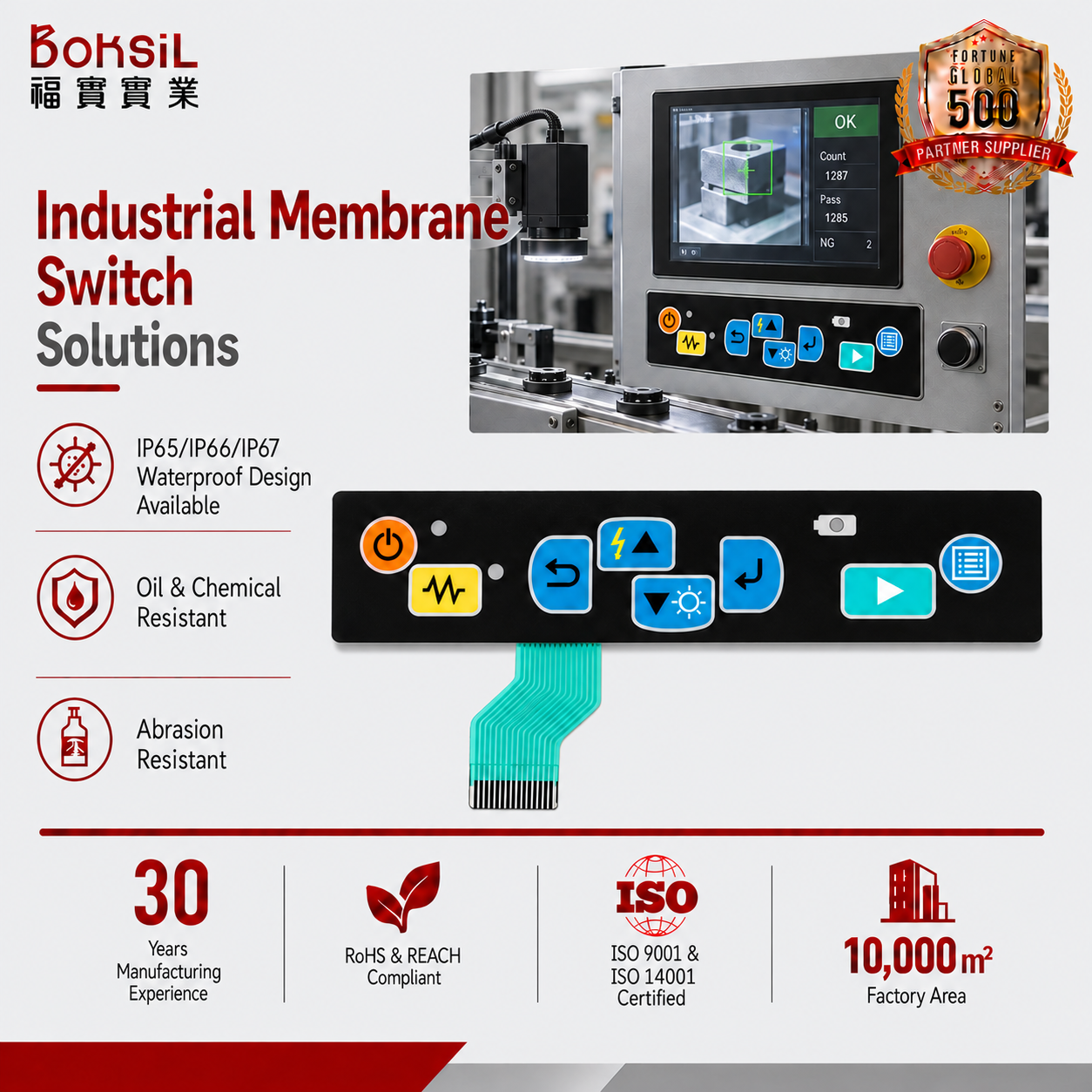
Custom Capacitive Touch Screen Panel Screen Printing Graphic Overlay Membrane Switch
- Substrate: Optical Grade PET / PC
- Actuation: Zero-Force Capacitive Sensing
- Surface Finish: Anti-Glare / Fine Velvet Matte
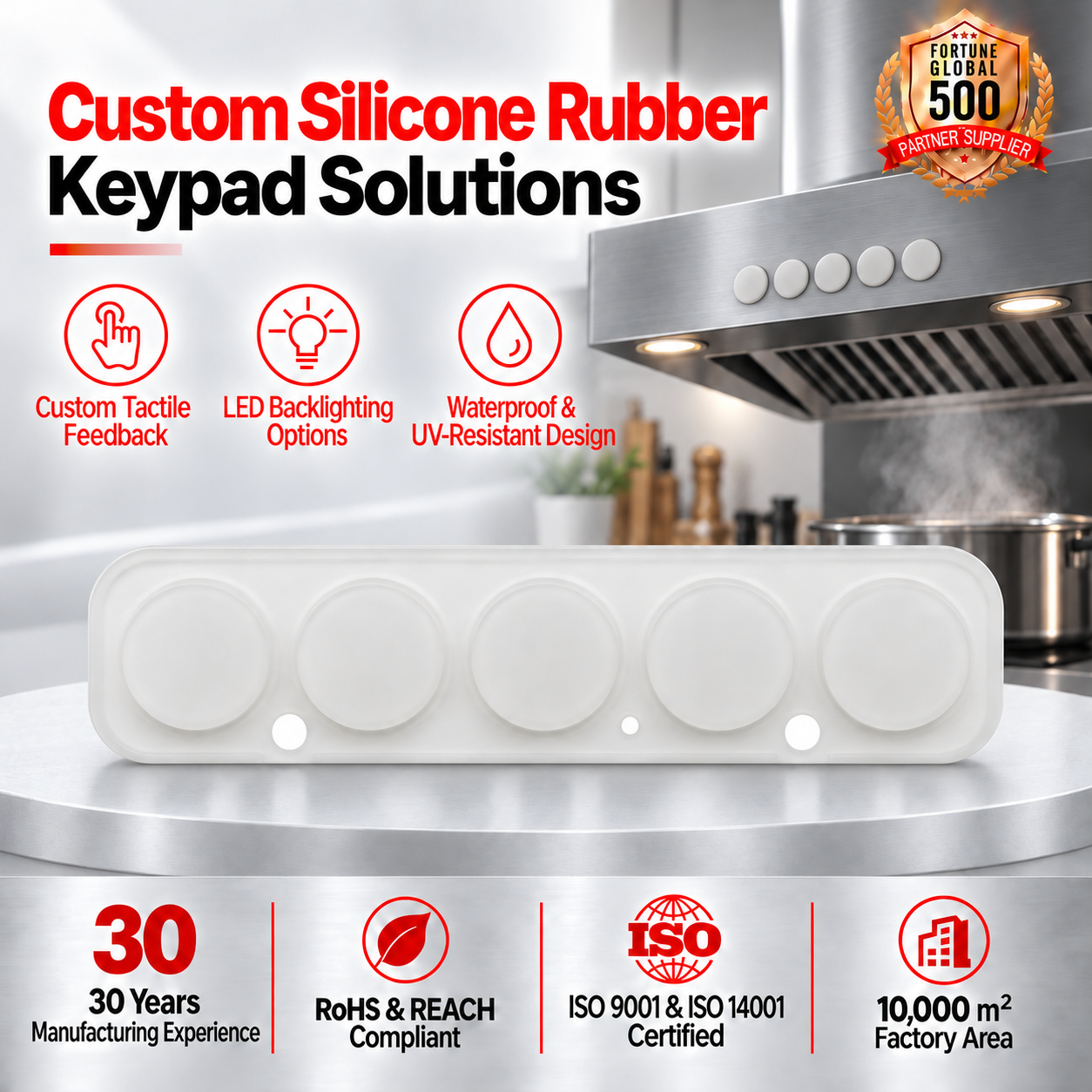
Home Appliance 5 Circular Soft Silicone Rubber Keypad Front Panel Button Unit
- Elastomer: 50° Shore A Medical Silicone
- Integration: PET Tail Circuit Interfacing
- Cycle Life: >1,000,000 Depressions
Custom Manufacturer Epoxy Silicone Rubber Keypad OEM/ODM Low Profile Waterproof
- Surface Coat: Crystal Clear Optical Epoxy Dome
- Protection: Hermetic IP67 Enclosure Seal
- Tactile Feedback: Snap Dome Integration
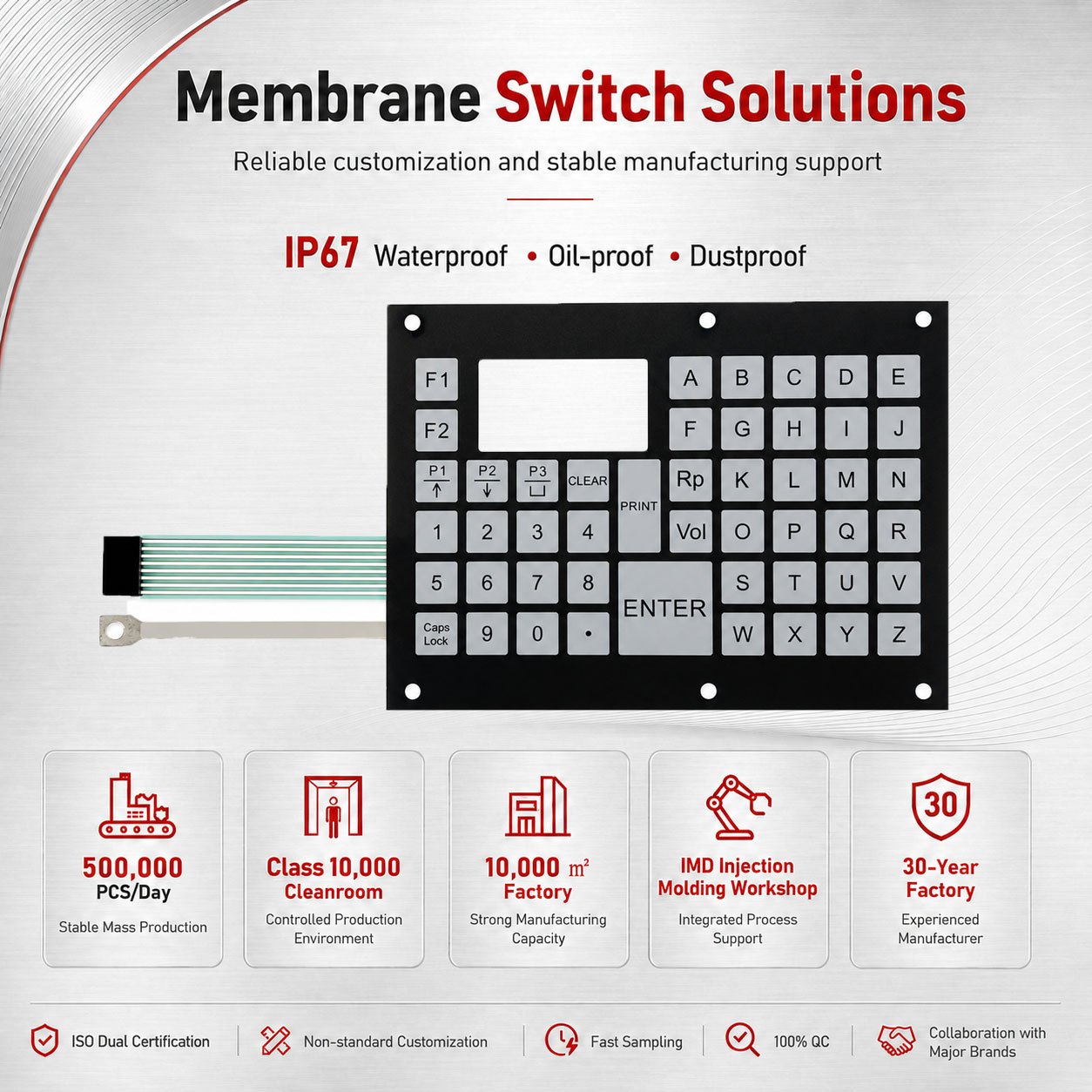
Custom Waterproof Wired Screen Wireless Tactile Switch Panel Fuel Dispenser Board
- Base Film: Autotex PET (High Solvent Res.)
- Adhesive System: 3M 200MP / 300LSE Barrier
- Environmental: Fuel & Hydrocarbon Impermeable
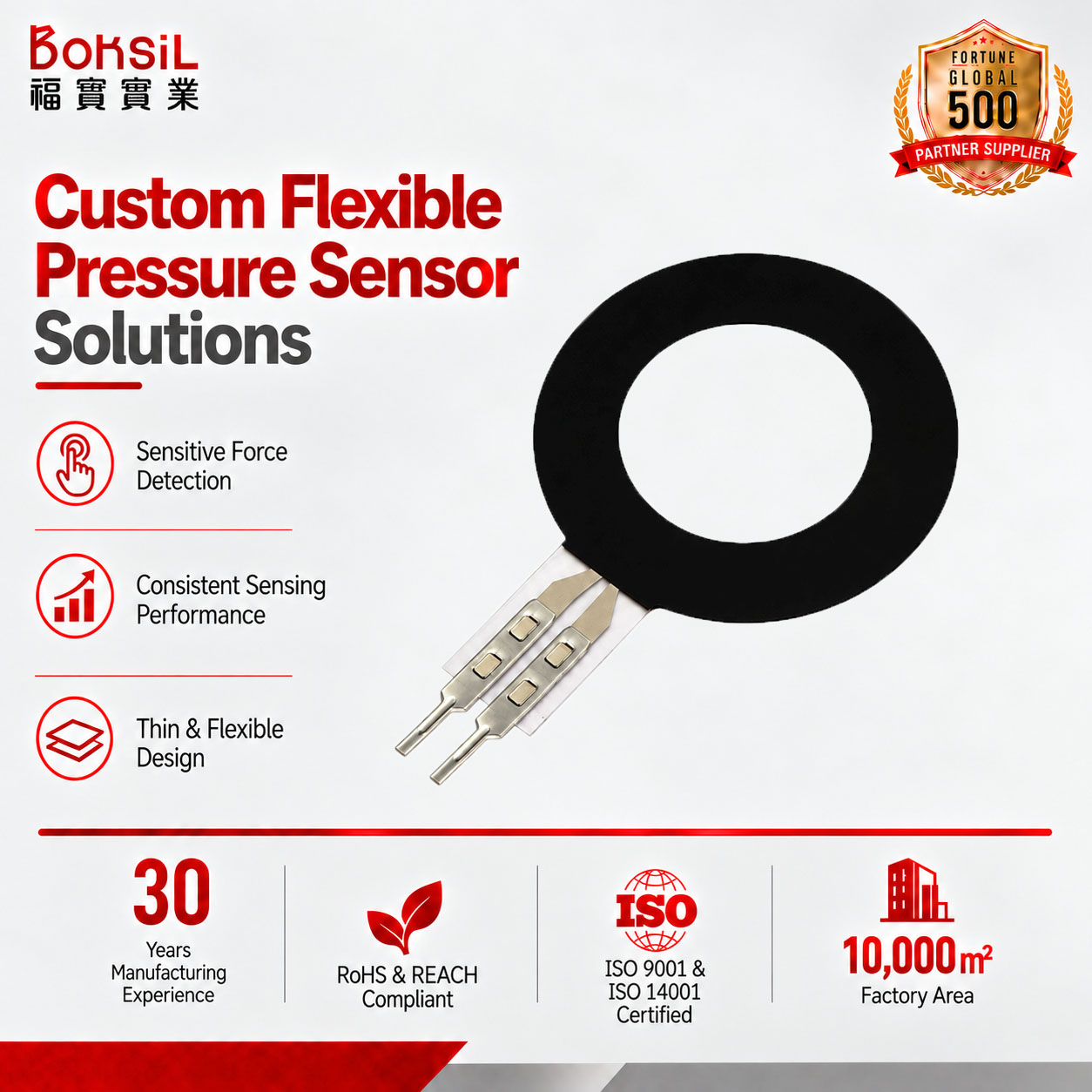
Universal FSR Flexibility Force Sensitive Sensor Capacitive Thin Film Resistor
- Conductor: Colloidal Carbon / Silver Matrix
- Sensitivity: 20g to 5kg Dynamic Range
- Substrate: Heat-Stabilized Melinex PET
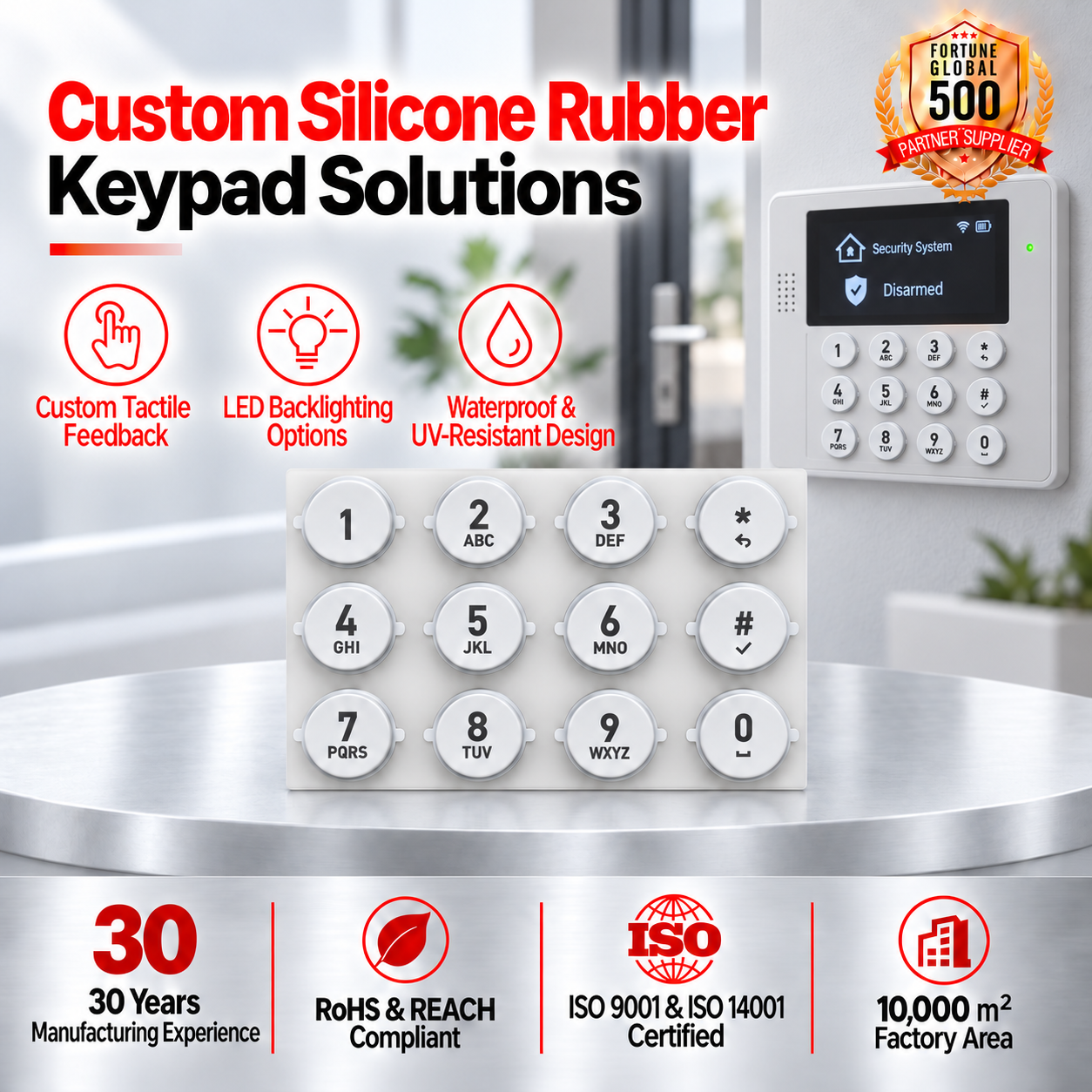
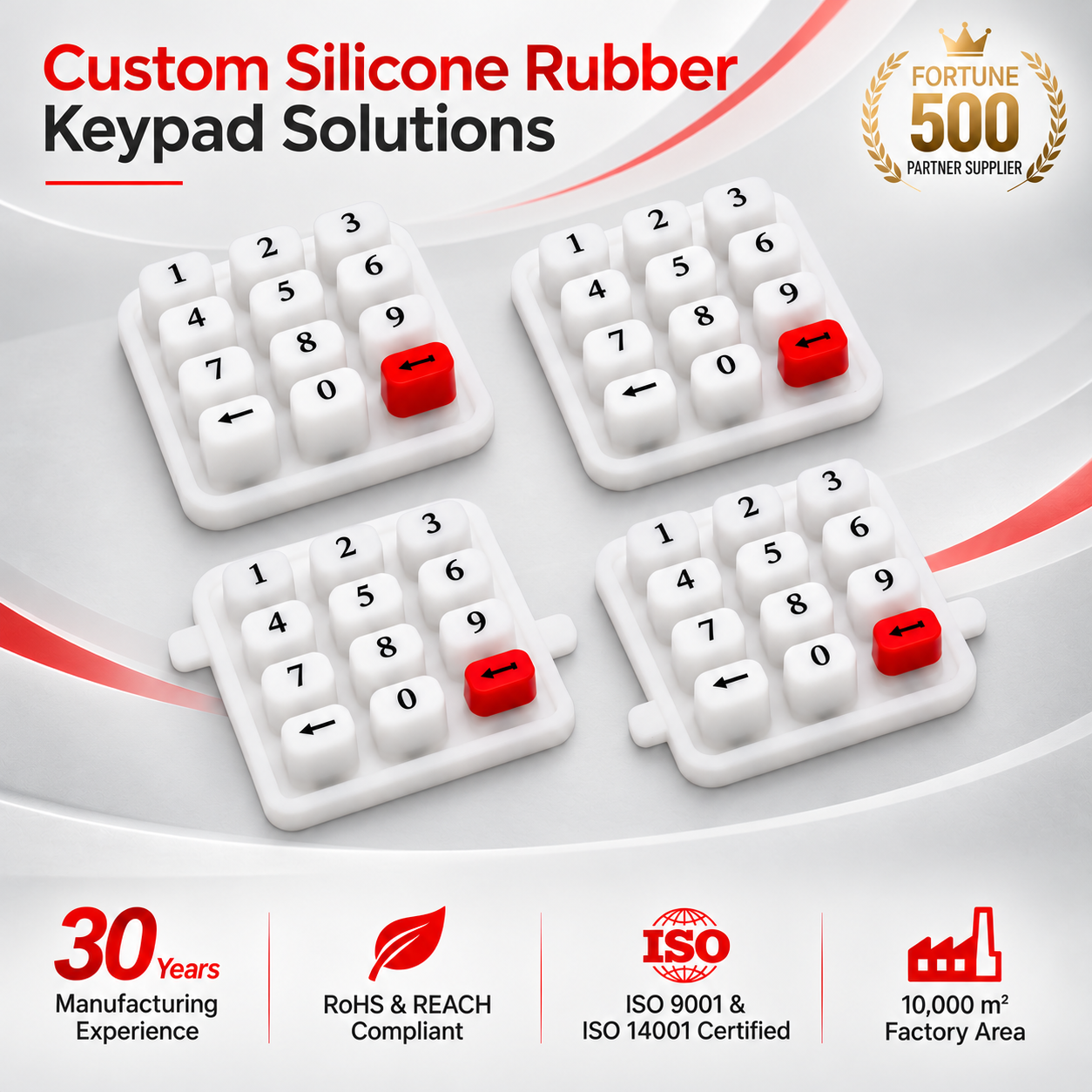
Custom OEM Silicone Rubber Keypad 3x4 Numeric 12 Keys Round Plastic Button P+R
- Cap Material: Molded ABS / Polycarbonate Top
- Conductive Pill: Low Resistance Carbon / Gold Plated
- Contact Resistance: <100 Ohms Stable
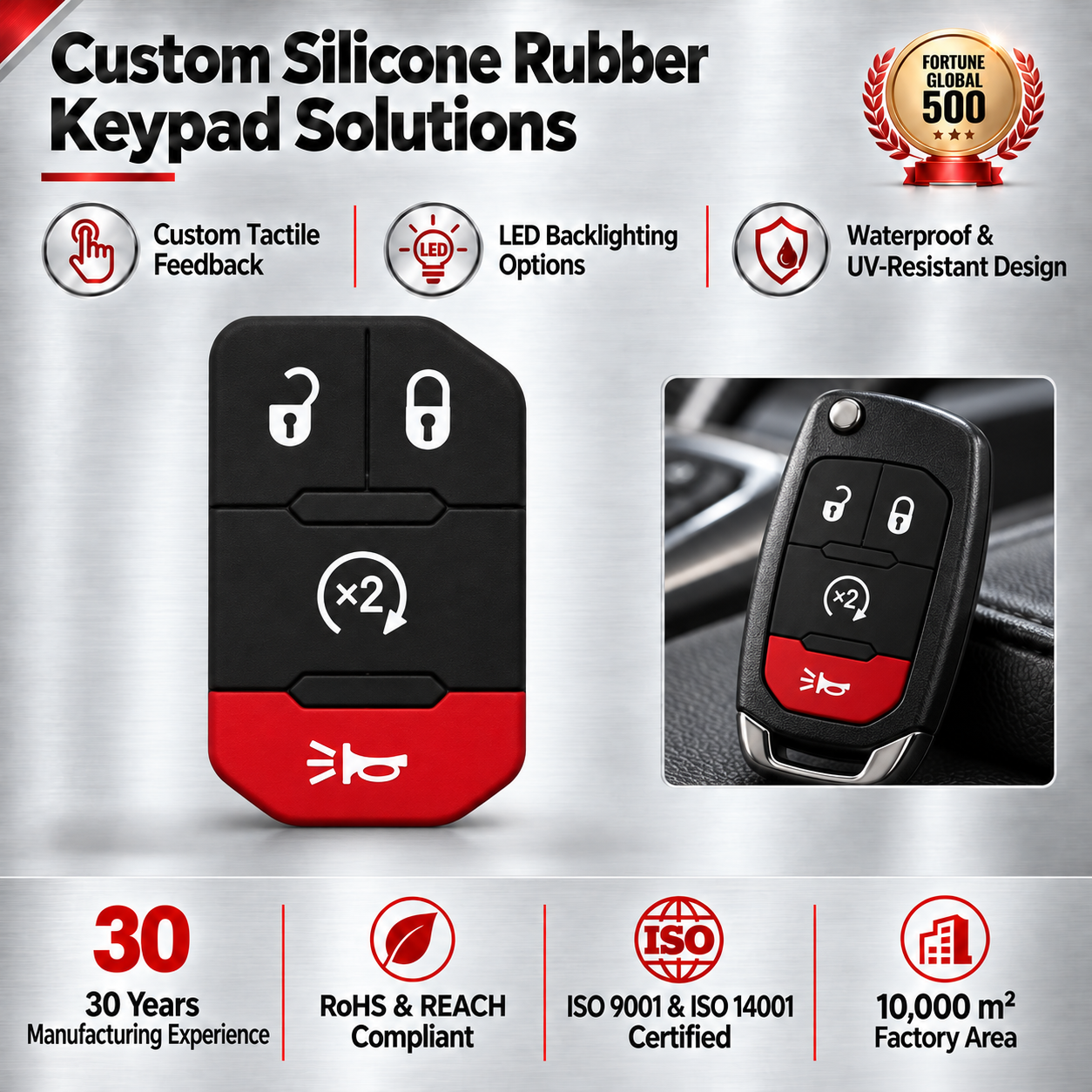
Waterproof Silicone Car Key Cover Press Button Rubber Keypad 4 Buttons Wholesale
- UV Stability: Delta E <1.0 (500h QUV Test)
- Printing: Precision Pad Printing with PU Coating
- Protection: Dust & Liquid Hydrophobic Seal
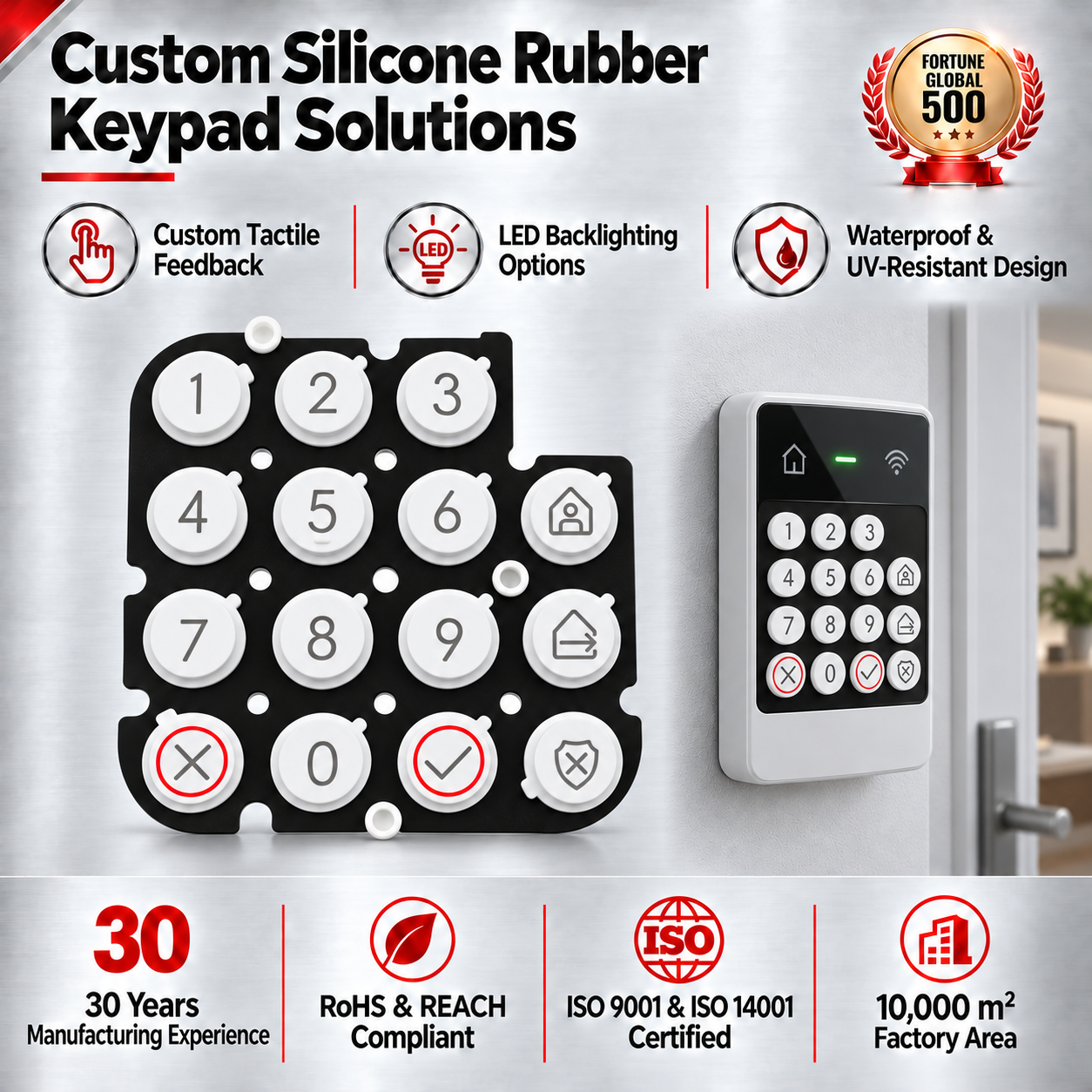
Factory Wholesale Numeric Conductive Silicone Keypad Panel Embossed Appliance Buttons
- Embossing: Rim & Pillow Thermal Forming
- Backlight: Selective Dead-Front LED Windows
- Operating Temp: -40°C to +85°C Stable
A Direct, Verified Industrial Campus in Dongguan
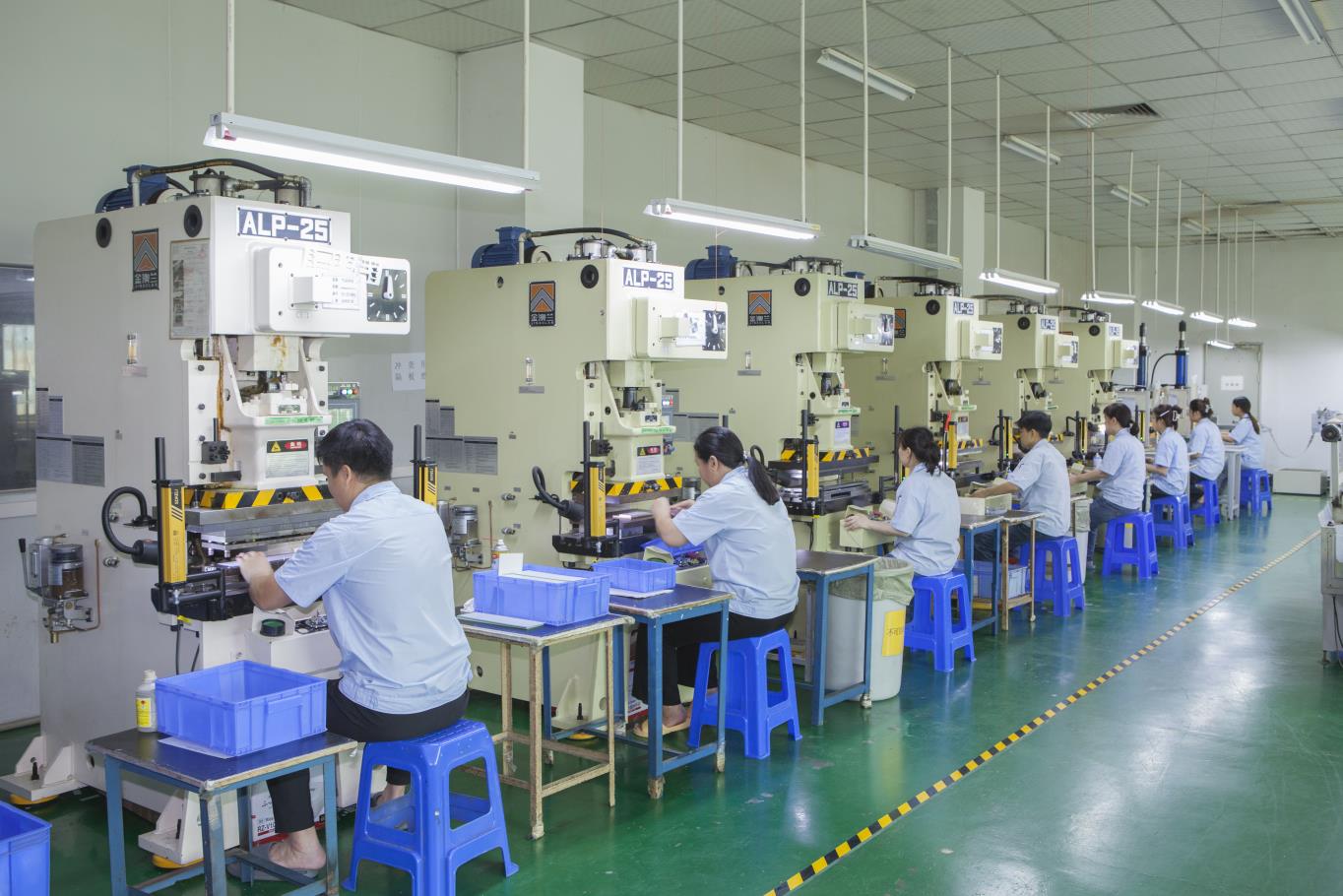
Dongguan AXRU Electronics Co., Ltd. is an engineered-to-order manufacturing partner. Unlike trading agencies, our complete design, tooling, screen printing, class-10,000 cleanroom lamination, and testing operations remain 100% on-site.
Consolidated Manufacturing: Eliminating Risk for Global OEM Procurement
Global original equipment manufacturers face mounting pressures: unpredictable sub-tier lead times, layer delamination, and shifting color tolerances across split-production contracts. AXRU solves these systemic failures through a unified production ecosystem.
From initial Gerber and CAD DFM clearance to raw film stabilization, precision optical screen printing, metal-dome pop-pack pick-and-place, and automated flatbed die-cutting, every stage is executed within our Dongguan headquarters. This vertical integration allows engineering teams in Europe, North America, and Australasia to validate stack-up geometries and prototype samples in as few as 5 working days.
- Sub-Tier Raw Material Traceability: Direct partnerships with MacDermid Autotype, 3M, Nitto, and Acheson conductive silver pastes.
- Class 10,000 Dust-Free Printing: Eliminates microscopic pinholes, conductive trace fractures, and optical window blemishes.
- Full Regulatory Conformance: RoHS 3.0 (2015/863/EU), REACH (EC 1907/2006), and halogen-free engineering processes.
- Dedicated Prototype Cell: Rapid CNC plotters and digital flatbed proofing allow low-volume validation without high initial steel-rule tooling charges.
Polyester (PET) vs. Alternate Polymers in HMI Engineering
An empirical evaluation of mechanical flex fatigue, chemical permeation, and dimensional thermal stability across primary front-panel substrate materials.
Mechanical Flex Life & Fatigue Resistance
Biaxially Oriented Polyethylene Terephthalate (BOPET) exhibits superior molecular orientation compared to polycarbonate (PC). Under cyclic flexural fatigue tests, PET film overlays (such as Autotex EBA/F) maintain mechanical springback beyond 5,000,000 switch switch actuations without micro-fracturing or localized stress whitening, whereas standard PC films degrade and micro-craze around 50,000 to 100,000 actuations.
Aggressive Chemical & Solvent Immunity
Industrial machinery, medical instrumentation, and marine controllers encounter harsh wipe-down regimes. Hard-coated PET films deliver total resistance to isopropyl alcohol, methyl ethyl ketone (MEK), gasoline, dilute acids, and hospital-grade quaternary disinfectants. Polycarbonate, when exposed to MEK or acetone, suffers rapid dissolution, surface crazing, and catastrophic optical clouding within seconds.
Optical Clarity, Haze & Texturing
Advanced UV-cured textured lacquers applied to PET substrate permit custom gloss management: from anti-glare fine matte finishes (<15% gloss) for sunlight readability to ultra-clear optical display windows (transmission >91%). This selective texturing maintains dead-front cosmetic integrity where legends disappear until illuminated by subsurface surface-mount LEDs.
| Evaluation Parameter | Biaxial PET (e.g. Autotex XE / V) | Polycarbonate (Lexan 8010 / HP92) | PMMA Acrylic (Cast Front Plate) | Molded Silicone Rubber Front |
|---|---|---|---|---|
| Mechanical Switch Life | > 5,000,000 switch cycles | ~ 100,000 switch cycles | N/A (Rigid Structural Substrate) | 1,000,000 - 5,000,000 cycles |
| Chemical / Solvent Resistance | Excellent (Immune to MEK, IPA, Oils) | Poor (Dissolves in MEK, Aromatic Ethers) | Moderate (Sensitive to Alcohol/Acetone) | High (Except Petroleum Distillates) |
| Embossing Retention | Superior at Elevated Temps (<85°C) | High Initial Crispness; Low Fatigue Life | Cannot be Foil-Embossed | Molded Integral Geometry |
| Dielectric Breakdown Voltage | 18 - 22 kV / 100 µm | 14 - 17 kV / 100 µm | 18 - 20 kV / 1 mm | 18 - 24 kV / 1 mm |
| Dimensional Heat Shrinkage | < 0.2% @ 120°C (Pre-Stabilized) | ~ 0.5% @ 120°C | Rigid, Expands via CTE | Negligible Post-Cured Shrink |
| Primary Target Application | Medical Devices, CNC HMIs, Rugged Tools | Low-Cost Consumer, Flat Graphic Plates | Optically Clear Touch Monitors, Lenses | Field Radios, Heavy Vehicles, Keypads |
Product Purchasing & Strategic Sourcing Trends for 2025–2030
Actionable procurement intelligence for hardware directors and sourcing executives navigating supply-chain consolidation, sustainability mandates, and technical stack shifts.
1. Transition from Standalone Overlays to Turnkey Modules
Procurement managers are aggressively migrating away from multi-vendor sourcing where graphic overlays are cut in one shop, circuits printed in a second, and final PCB bonding occurs at an EMS. Purchasing fully integrated sub-assemblies—incorporating pre-laminated aluminum support plates, display windows, SMT LEDs, and embedded micro-controllers—cuts inbound inspection friction and lowers Total Cost of Ownership (TCO) by up to 24%.
2. ESG Alignment & Halogen-Free Mandates
Tier-1 medical and European industrial brands now enforce strict environmental criteria. Standard solvent-borne PVC screen-printing inks are systematically replaced with UV-curable, halogen-free, and REACH-compliant formulations. Furthermore, bio-based and PCR-derived (post-consumer recycled) PET films are entering validation phases, allowing OEMs to achieve net-zero Scope 3 carbon compliance without forfeiting UL94 flammability ratings.
3. Adhesive Layer Specialization for LSE Plastics
With the proliferation of powder-coated steel enclosures and low surface energy (LSE) molded housings (polypropylene, polyethylene, polycarbonate-PBT blends), default adhesives like standard rubber adhesives delaminate over time. Sourcing specifications now mandate advanced modified acrylic transfer tapes, specifically 3M 300LSE and 200MP systems, engineered to guarantee peel adhesion greater than 18 N/10mm under cyclic thermal shock (-40°C to +105°C).
Emerging Technology Trends in Graphic Overlay Development
How next-generation Human-Machine Interface designs combine smart illumination, embedded sensing, and touch feedback into sub-millimeter profiles.
Light Guide Film (LGF) Uniform Lighting
Bulky electroluminescent (EL) foils and uneven discreet LED hotspots are obsolete. Micro-etched Light Guide Films (0.125mm to 0.25mm) redirect light emitted from side-mounted SMT LEDs uniformly across graphic legends and key perimeters with zero optical bleed, slashing power consumption by up to 60%.
In-Mold Electronics (IME) 3D Integration
Merging functional screen-printed circuits with thermoformed structural plastic. Conductive silver tracks printed onto flat PET films survive deep-draw vacuum thermoforming and subsequent high-pressure plastic injection molding, delivering single-part 3D curved smart surfaces for vehicle consoles and luxury home appliances.
Antimicrobial & Self-Healing Coatings
Post-pandemic healthcare demands continuous biocide action. Specialized PET front surfaces are impregnated with active silver-ion additives that continuously disrupt microbial cell walls (proven 99.9% kill rate against MRSA and E. coli per ISO 22196), retaining antimicrobial efficacy despite thousands of hospital sanitation wipes.
Capacitive Hybrid Tactile Combinations
Modern operator panels increasingly integrate non-tactile solid-state capacitive sliders with critical emergency tactile dome switches. AXRU’s hybrid engineering enables printed ITO-replacement conductive traces alongside stainless-steel snap domes on the same flexible circuit plane, guaranteeing intuitive zero-error human feedback.
Standard Operating Procedure: Quality Control Lifecycle
Every production batch undergoes exhaustive multi-point electrical, environmental, and tactile testing within our certified Dongguan reliability laboratories.
Incoming Material Spectroscopy
Spectrophotometer raw-lot analysis confirming optical density, substrate thickness tolerance (±5µm), surface tension dynes, and moisture content across all PET film rolls.
Micro-Registration Precision
Automated optical inspection (AOI) checking multi-pass screen printing alignment within ±0.05mm. Ensures pinpoint registration on translucent windows and dead-front graphic areas.
Actuation & Force Profiling
Automatic force-displacement testing rigs map metal dome actuation force (typically 250g - 450g), snap ratio (>45%), and return travel, verifying uniform tactile feedback across every key.
Environmental Stress Chamber
Batch sampling in programmable temperature/humidity chambers: -40°C to +85°C thermal cycling at 95% RH for 240 continuous hours to eliminate risk of layer delamination or silver migration.
Frequently Asked Questions for Sourcing Directors
Comprehensive engineering guidance addressing common technical, operational, and commercial questions raised during custom graphic overlay procurement.