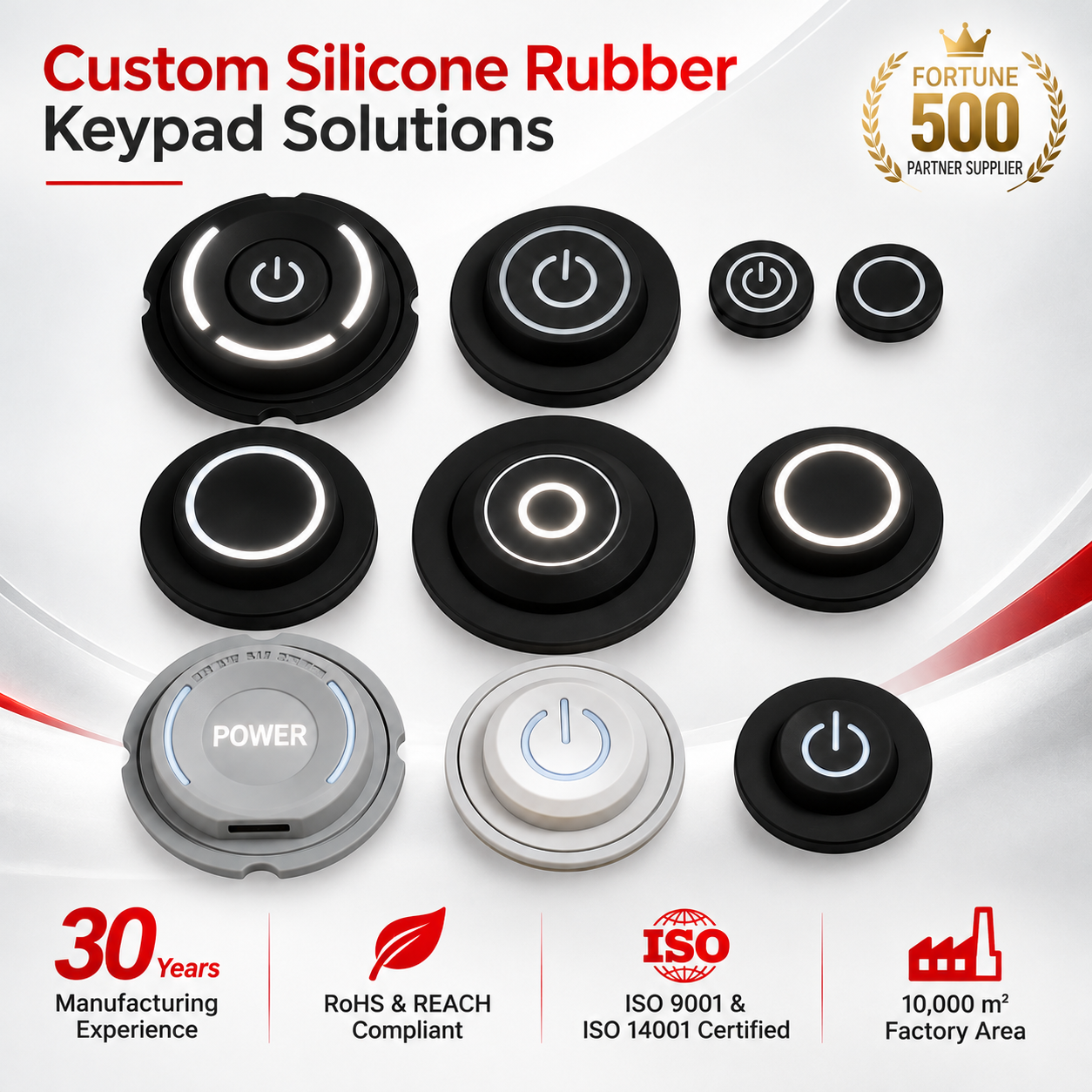
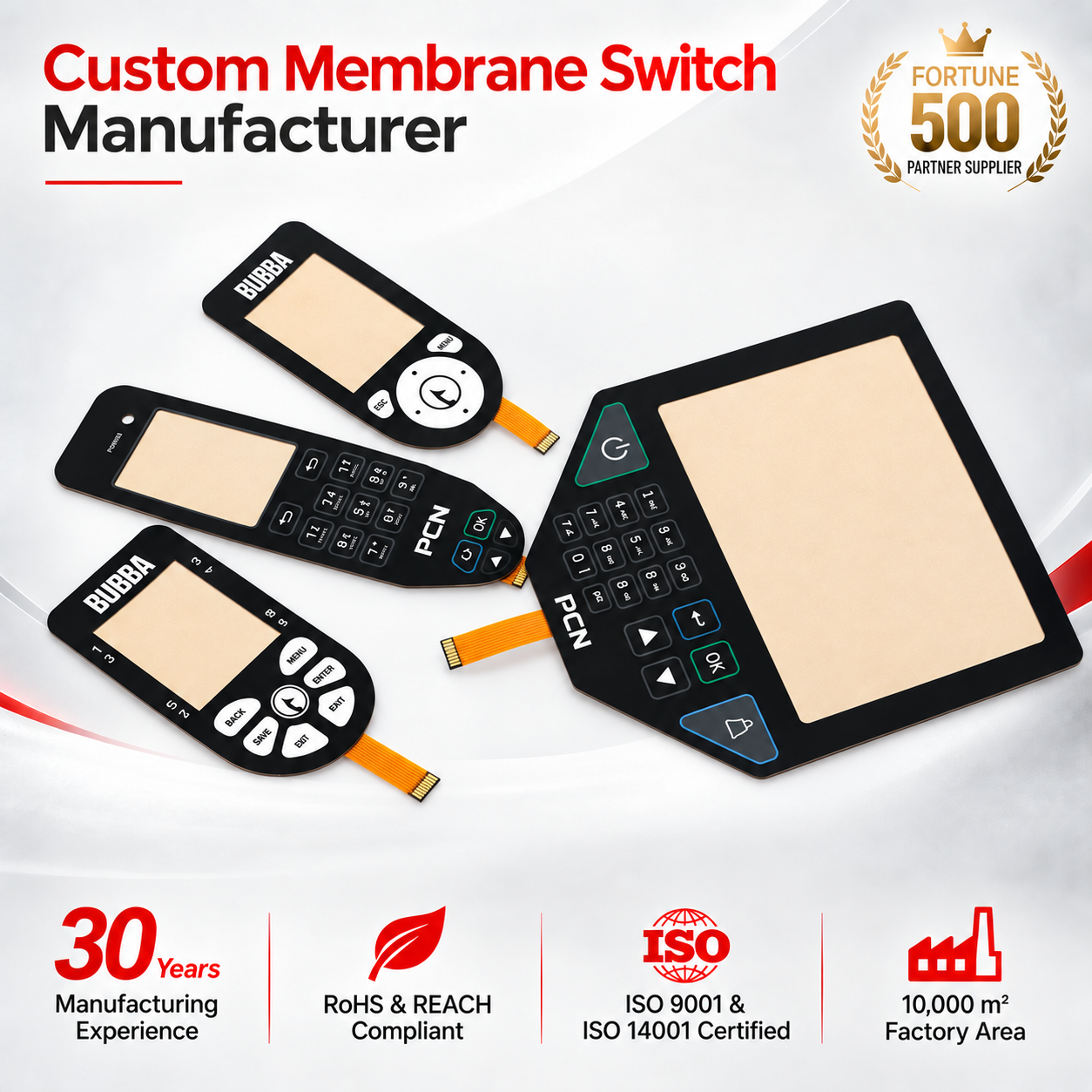
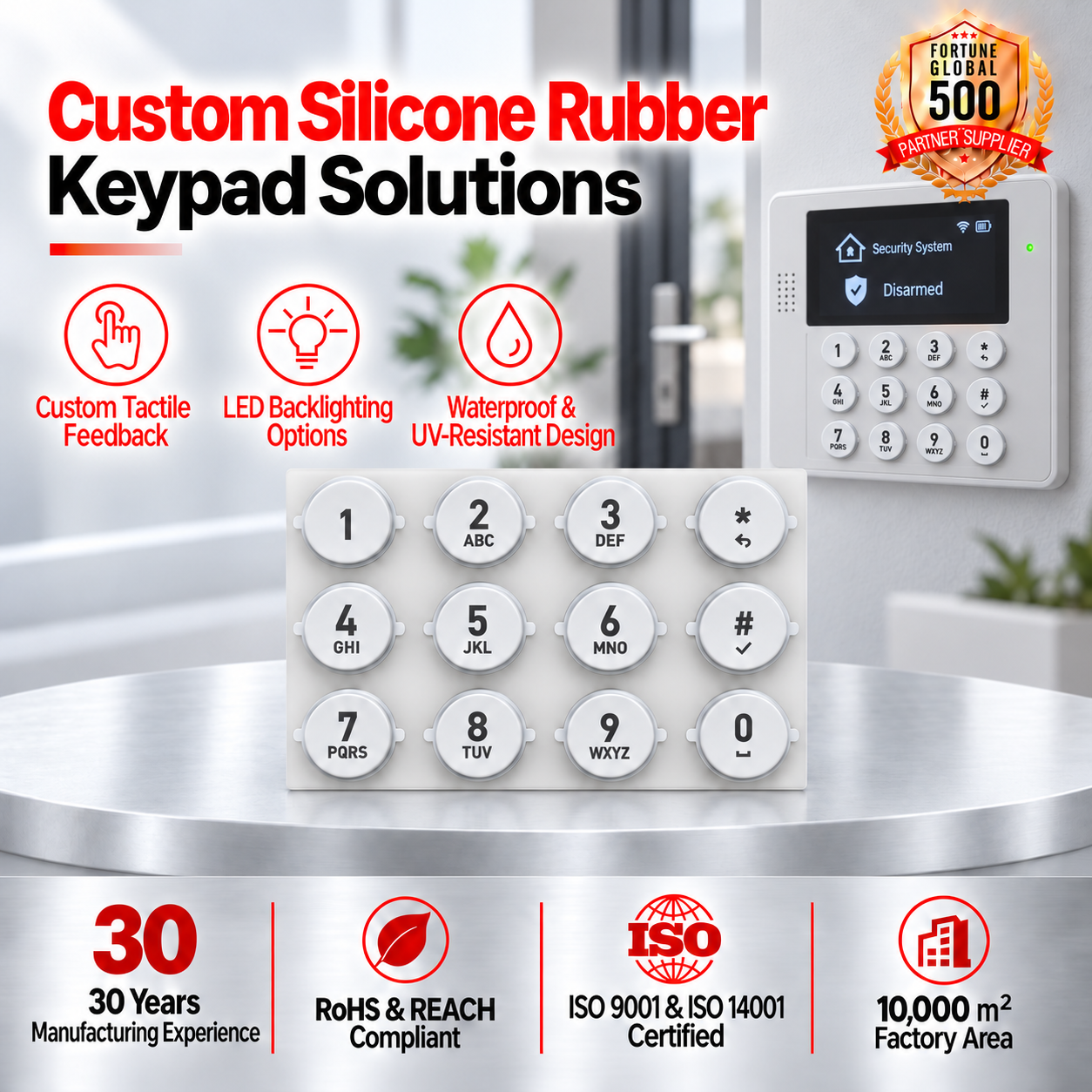
Featured LED Keypad & Custom Interface Assemblies
Engineered for extreme reliability across industrial automation, critical healthcare monitoring, automotive avionics, and high-frequency input controls.
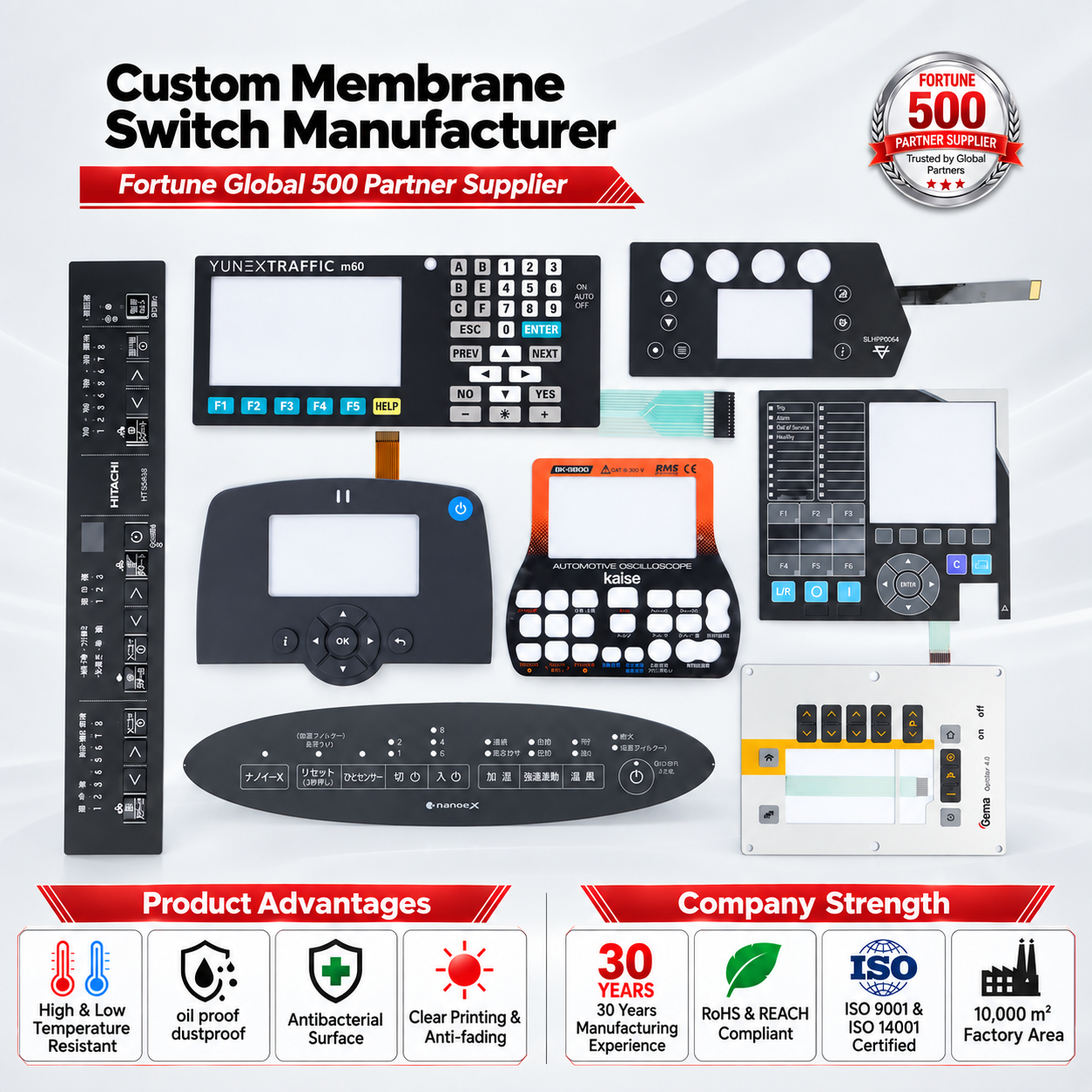
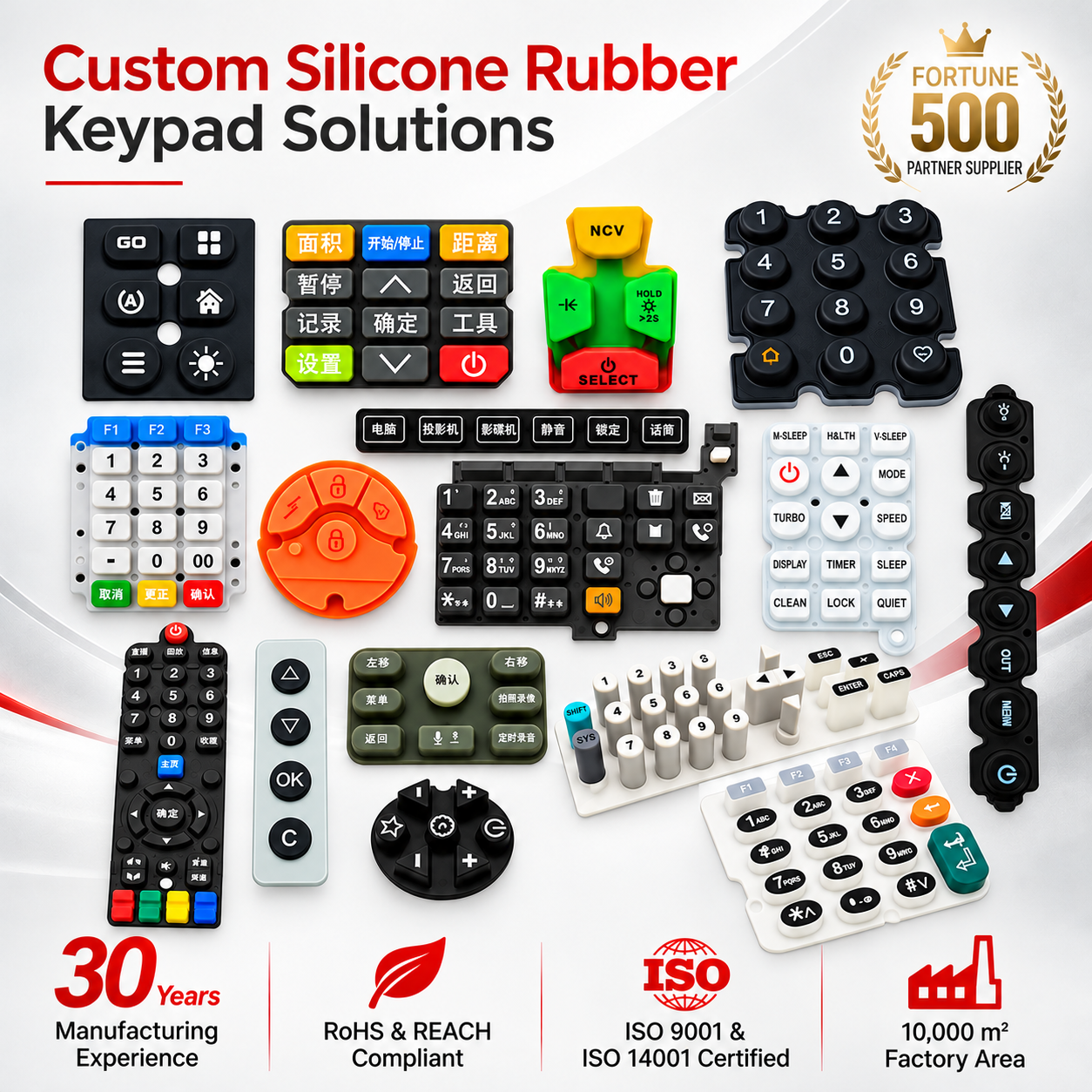
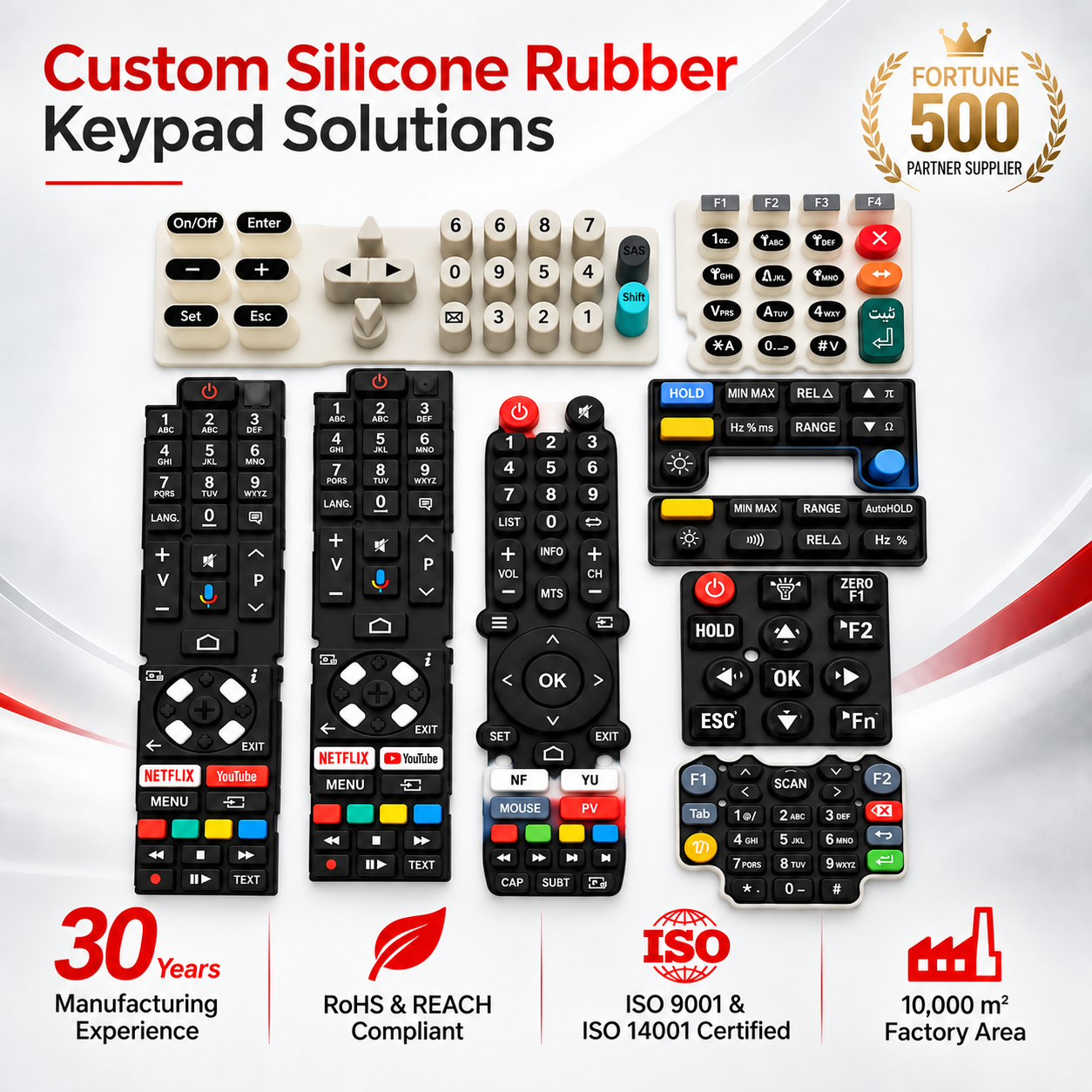
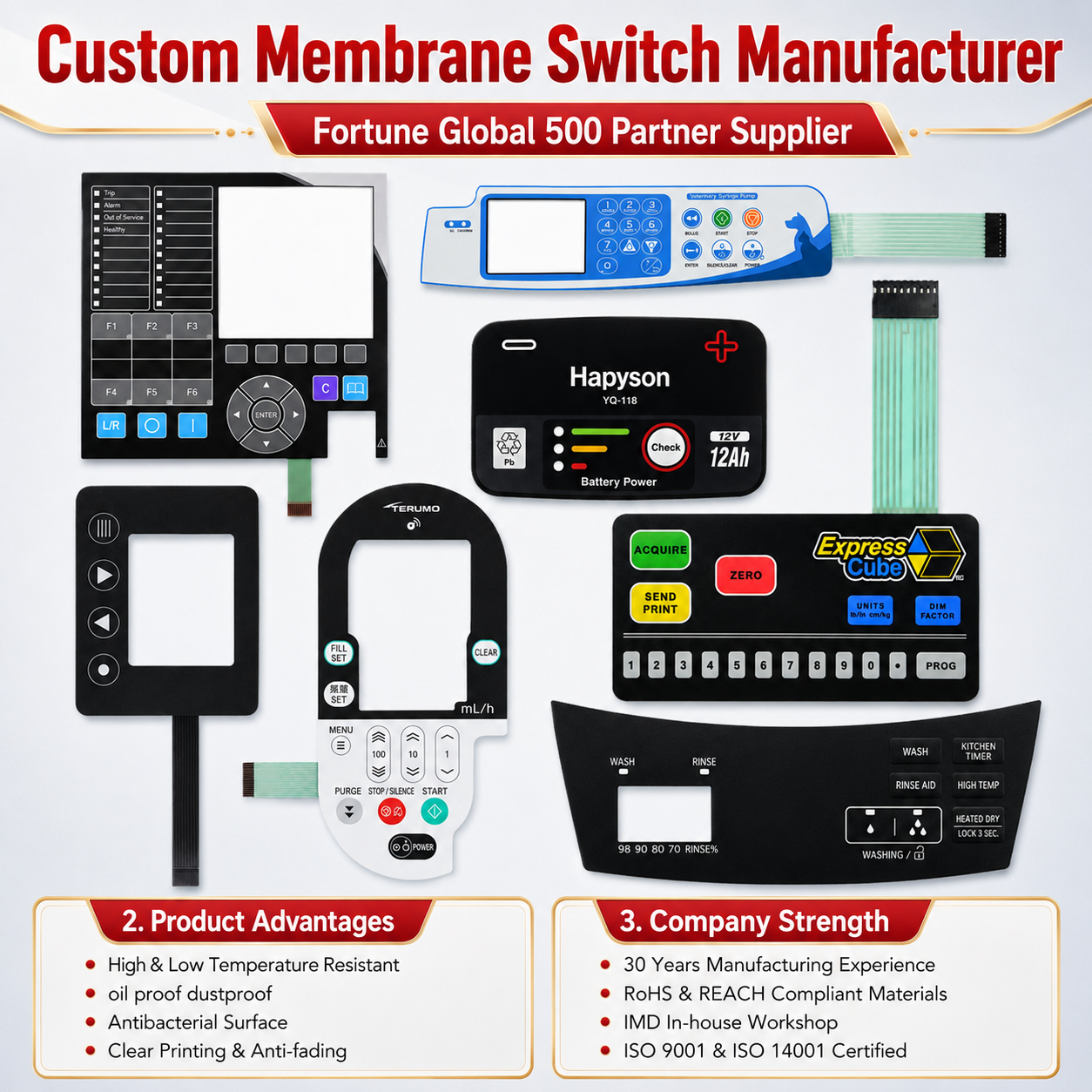
Why Global Tier-1 OEMs Source from Dongguan AXRU Electronics
Operating from our fully vertically integrated 10,000㎡ industrial complex in Dongguan, China, we eliminate subcontractor variances through end-to-end proprietary fabrication, cleanroom printing, and rigorous IPC-standard electronic verification.
Integrated SMT Component Placement
We populate micro-SMD LEDs (0603, 0805, 1206 packages), resistors, photodiodes, and sensors directly onto flexible polyester (PET) or copper polyimide (FPC) circuits using high-speed pick-and-place equipment with conductive bonding epoxies.
Supplier to Global Fortune 500 Brands
Qualified through stringent third-party quality evaluations, AXRU functions as an audited tier-one and tier-two HMI assembly supplier to international automotive manufacturers, healthcare instrumentation giants, and critical metering enterprises.
Full In-House Reliability Testing Lab
Our facility houses 9+ calibrated quality machines: automated force-displacement stroke analyzers, million-cycle dome endurance testers, computerized spectrophotometers, UV yellowing chambers, and thermal-hygrometric cyclic chambers.
Advanced Optical Diffusion & Dead-Fronting
Eliminate light leakage and hot-spotting through our proprietary Light Guide Film (LGF) integration and precise multi-pass selective translucent screen printing, yielding pristine uniform icon illumination with high-contrast hidden-until-lit capabilities.
ESD, EMI & RFI Shielding Barriers
Prevent system resets and field failures from static discharge. We apply printed conductive carbon grid arrays, solid aluminum foil grounds, or vaporized indium-tin-oxide (ITO) layers achieving electrostatic immunity up to 15kV to 25kV.
Zero Subcontracting & Rapid DFM Prototyping
From initial Gerber/CAD design-for-manufacturing checks to laser cutting, screen development, custom lamination, and pin crimping, all manufacturing steps remain strictly in-house, enabling production sample lead times within 5 to 7 working days.
Engineering Architecture of High-Reliability LED Membrane Keypads
A comprehensive teardown of cross-layer mechanics, optoelectronic routing, and silver trace migration dynamics for electrical engineers and procurement specialists.
1. The Cross-Layer Stack-Up: Balancing Tactility, Sealing, and Optical Clarity
A precision-manufactured LED membrane keypad is far more than a printed decorative cover with mechanical switches beneath. It is a multi-strata composite laminate where each micron of thickness directly influences actuation travel, tactile snap ratio, light transmission, and environmental hermeticity. When integrating Surface Mount Device (SMD) LEDs inside a sealed interface, mechanical engineers must account for component elevation (typically 0.35mm to 0.80mm for low-profile 0603 LEDs). Failing to construct an adequate relief cavity or spacer compensation will inevitably cause pre-travel binding, surface dimpling, or premature dome collapse.
Layer 1: Graphic Overlay (Autotex PET / Lexan PC)
Second-surface reverse screen-printed substrate ranging from 0.125mm to 0.25mm. Textures vary from anti-glare fine matte to chemical-resistant velvet. Inks are protected from surface solvents, UV exposure, and mechanical abrasion.
Layer 2: Overlay Adhesive & LED Window Cavities
High-shear acrylic adhesives (e.g., 3M 467MP or 200MP series). Die-cut with micro-clearances around tactile metal domes and LED light emitters to prevent fluid boundary breaches and internal air pocket entrapment.
Layer 3: Metal Dome Retainer & Light Guide Film (LGF)
Polyester retainer sheet securing stainless steel domes (SUS301/SUS304, nickel or gold-plated). If illuminated via side-firing LEDs, an optical-grade micro-dot embossed elastomer LGF is integrated to distribute uniform light evenly across key icons.
Layer 4: Circuit Spacer & Static Discharge Shield
Optically clear or opaque polyester spacer (0.125mm–0.300mm) with breathable venting channels connecting dome chambers to maintain uniform tactile snap pressure, accompanied by an aluminum foil or printed carbon ESD ground layer.
Layer 5: Active Circuit Layer (Conductive Silver vs. Copper FPC)
Heat-stabilized PET substrate screen-printed with low-resistance conductive silver paste (under 0.05 Ω/sq) and dielectric crossover insulation, or a polyimide (PI) Flexible Printed Circuit (FPC) with etched copper traces for high-density LED arrays.
Layer 6: Rear Adhesive & Enclosure Seal
Modified acrylic structural adhesive selected according to the mating housing material (die-cast aluminum, ABS, polycarbonate, or sheet metal), ensuring continuous perimeter sealing meeting IP65, IP66, or immersion-rated IP67 standards.
2. Electrical Design: Mitigating Silver Migration in Humid Environments
A critical failure mechanism in cost-optimized membrane keypads is silver ion migration (electrochemical dendrite growth). When direct-current (DC) voltage potential exists between adjacent printed conductive traces in the presence of trace moisture ingress, silver atoms oxidize at the anode, dissolve into micro-droplets of water, migrate toward the cathode, and plate out as metallic silver dendrites. Over time, these needle-like filaments bridge the dielectric separation gap, creating intermittent micro-shorts and catastrophic interface lockups.
AXRU Engineering Standard: To prevent electrochemical migration in our LED membrane switches, we mandate three technical safeguards: (1) Minimum trace separation margins of 0.75mm for silver tracks carrying continuous DC voltage; (2) Dual-pass overlapping dielectric overcoat encapsulating all active silver paths; and (3) Carbon ink overprinting covering silver contact fingers beneath tactile metal domes to prevent mechanical micro-fretting and expose zero bare silver to ambient air.
3. Tactile Dynamics: Metal Dome Selection vs. User Ergonomics
Tactile perception is determined by the snap ratio equation: Snap Ratio (%) = [(Actuation Force - Return Force) / Actuation Force] × 100. For industrial environments where operators wear nitrile or heavy leather work gloves, an actuation force of 350g to 500g with a crisp 50% snap ratio is recommended to prevent accidental presses. In clinical medical monitors, a quieter, lower-force dome (220g to 280g) with extended deflection travel reduces repetitive strain for healthcare staff while providing definitive tactile switching confirmation.
| Engineering Parameter | Silver Printed on PET (Standard) | Copper Flexible Printed Circuit (FPC) | Rigid Printed Circuit Board (FR-4) |
|---|---|---|---|
| Conductor Resistivity | 10 – 30 mΩ / square | < 0.5 mΩ / square | < 0.1 mΩ / square |
| Minimum Pitch / Trace Spacing | 0.50 mm (0.020") | 0.15 mm (0.006") | 0.10 mm (0.004") |
| SMD LED Assembly Method | Conductive Epoxy + UV Encapsulation | Lead-Free SMT Reflow Soldering | Standard Automated SMT Reflow |
| Bending & Flex Fatigue | Moderate; prone to micro-cracking if creased | Excellent; withstands dynamic flex cycles | None; rigid mounting surface only |
| Harsh Environment Resistance | Standard (requires perimeter sealing) | Superior (immune to silver migration) | Maximum (ruggedized substrate) |
| Tooling & Unit Cost Balance | Low tooling cost; best for 100–10,000 pcs | Moderate tooling; optimal for compact LEDs | Higher tooling; heavier unit structure |
Future Procurement Trends for LED Membrane Interfaces
How smart manufacturing, hybrid input modalities, and sustainable chemical regulations are reshaping HMI procurement roadmaps over the next five years.
1. The Transition from Bulky Discrete LEDs to Light Guide Film (LGF) Micro-Arrays
Traditional backlit membrane keyboards utilized top-firing discrete LEDs positioned directly behind graphic windows, necessitating thick multi-layer spacer cushions to house the bulb height and frequently resulting in harsh center "hot spots" with fading illumination at key perimeters. Global procurement departments are transitioning rapidly to Light Guide Film (LGF) backlighting. By utilizing ultra-thin (0.125mm to 0.25mm) high-refractive polycarbonate films with side-firing 0402 or 0603 white LEDs positioned along the keypad border, light is injected laterally and distributed via microscopic laser-etched extraction dots. This achieves ultra-flat panels below 1.2mm total thickness with >90% lighting uniformity across entire key surfaces while reducing overall power draw by 40%.
2. Convergence: Hybrid Capacitive-Touch and Tactile Dome Assemblies
Equipment buyers are moving away from purely mechanical or purely touch-glass interfaces. Industrial operators demand the sleek, completely planar, wipe-clean surfaces of capacitive panels combined with the safety redundancy and glove-operable physical click of a tactile metal dome. Our Dongguan engineering lines specialize in hybrid assemblies: a continuous, chemically resistant polycarbonate overlay with capacitive slider/wheel sensors for variable scrolling controls, bordered by emergency-stop or crucial functional keys built with tactile stainless steel domes and perimeter status LEDs.
3. Dead-Front Illumination with High-Contrast Optical Micro-Cavities
In modern medical diagnostic consoles and automotive dashboards, the "dead-front" aesthetic has become an essential user-experience specification. Icons and indicator graphics remain completely black and invisible to the operator until their designated subsystem is triggered, at which point the symbol illuminates sharply in vibrant white, amber, green, or red. Achieving true dead-front performance requires stringent opacity matching of background base inks, precise transmission spectrophotometry measurements, and zero pinhole leakage in dark rooms. AXRU utilizes automated optical density inspection to maintain an ink transmission variance below ΔE 0.5 across production lots.
4. Supply Chain Localization & Sustainable Polymer Compliance (RoHS, REACH, PFAS-Free)
Global environmental mandates are significantly impacting polymer selection. International supply chain managers must navigate European and North American regulations restricting per- and polyfluoroalkyl substances (PFAS) commonly present in legacy water-repellent surface coatings. Forward-looking manufacturers like AXRU Electronics have proactively transitioned to halogen-free, REACH-compliant, and SVHC-cleared hard-coated polyesters, coupled with low-VOC solvent-free UV-curable printing inks and RoHS-certified lead-free soldering processes on all FPC circuits.
Frequently Asked Questions for Sourcing LED Membrane Keypads
Direct answers to the most common engineering, tooling, electrical, and commercial inquiries submitted by OEM purchasing teams.
What is the minimum order quantity (MOQ) for custom LED membrane keypads at AXRU?
How do you solder or attach surface mount LEDs to flexible polyester (PET) circuits without melting the film?
What design files and specifications are required to receive an accurate DFM review and quotation?
Can AXRU build keypads capable of passing rigorous IP67 immersion and washdown protocols?
What is the difference between Autotex Polyester (PET) and Lexan Polycarbonate (PC) for overlay selection?
How does AXRU ensure uniform backlighting without noticeable hot-spots over large keypad buttons?
What quality assurance and electrical screening steps occur before international shipment?
What standard tail connector terminations can you integrate into the flexible output cable?
Ready to Engineer Your Custom LED Membrane Keypad?
Submit your 2D/3D mechanical drawings, schematic netlists, or aesthetic graphic concepts directly to our Dongguan engineering team. Receive a comprehensive Design for Manufacturability (DFM) evaluation, layer stack-up proposal, and itemized factory-direct quote within 24 hours.