Certified Membrane Switches & Integrated Control Panels
Engineered in our Intertek-audited Dongguan plant with 100% automated optical and electrical continuity verification. Select standard architectures or request bespoke CAD/DFM customization.
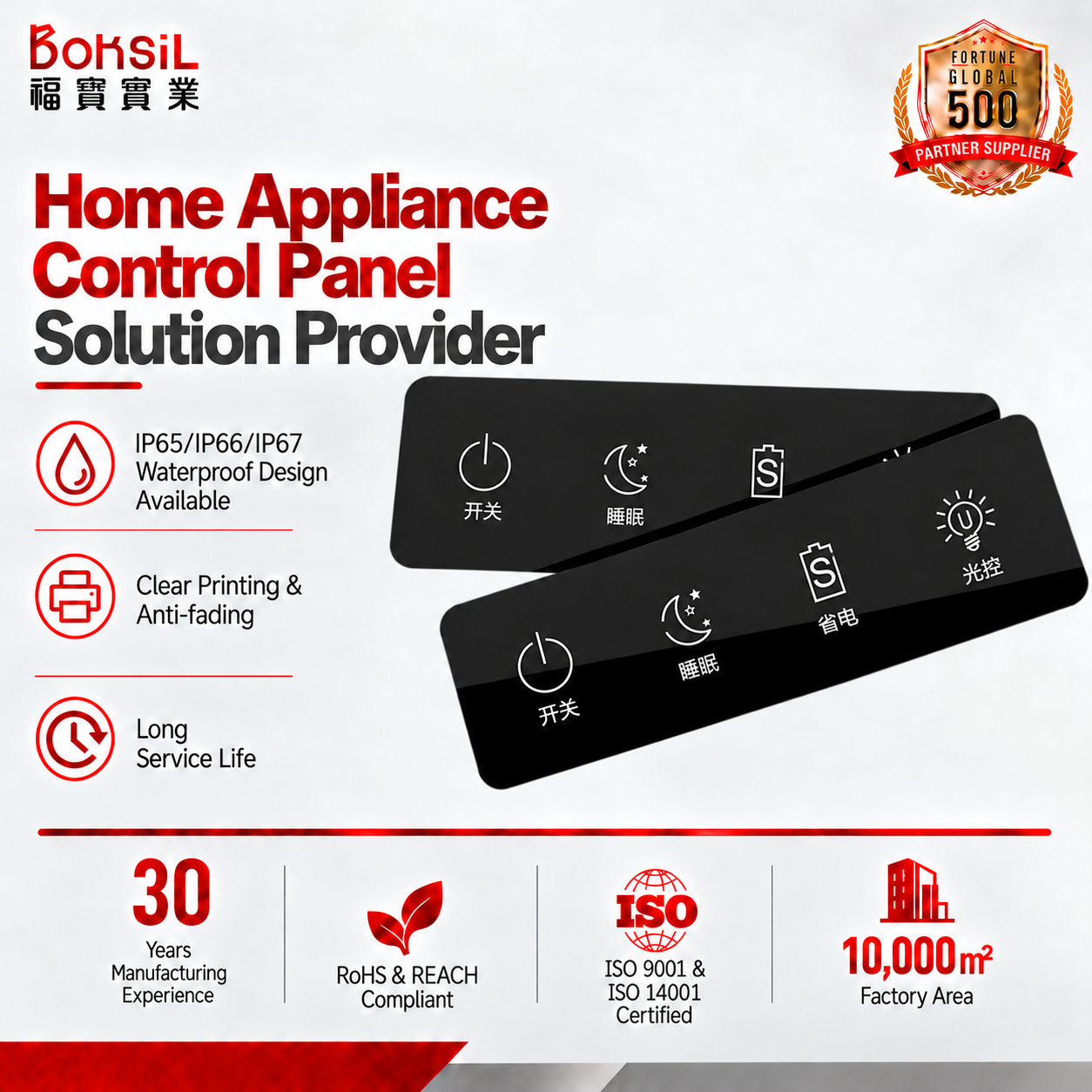
Factory Direct Custom Silk Screen Printing PMMA Graphic Overlay Front Panel
- Substrate: Optical PMMA / Acrylic
- Surface Hardness: ≥ 4H Hardcoat
- CE EMC Compliance: Shielded Dead-Front
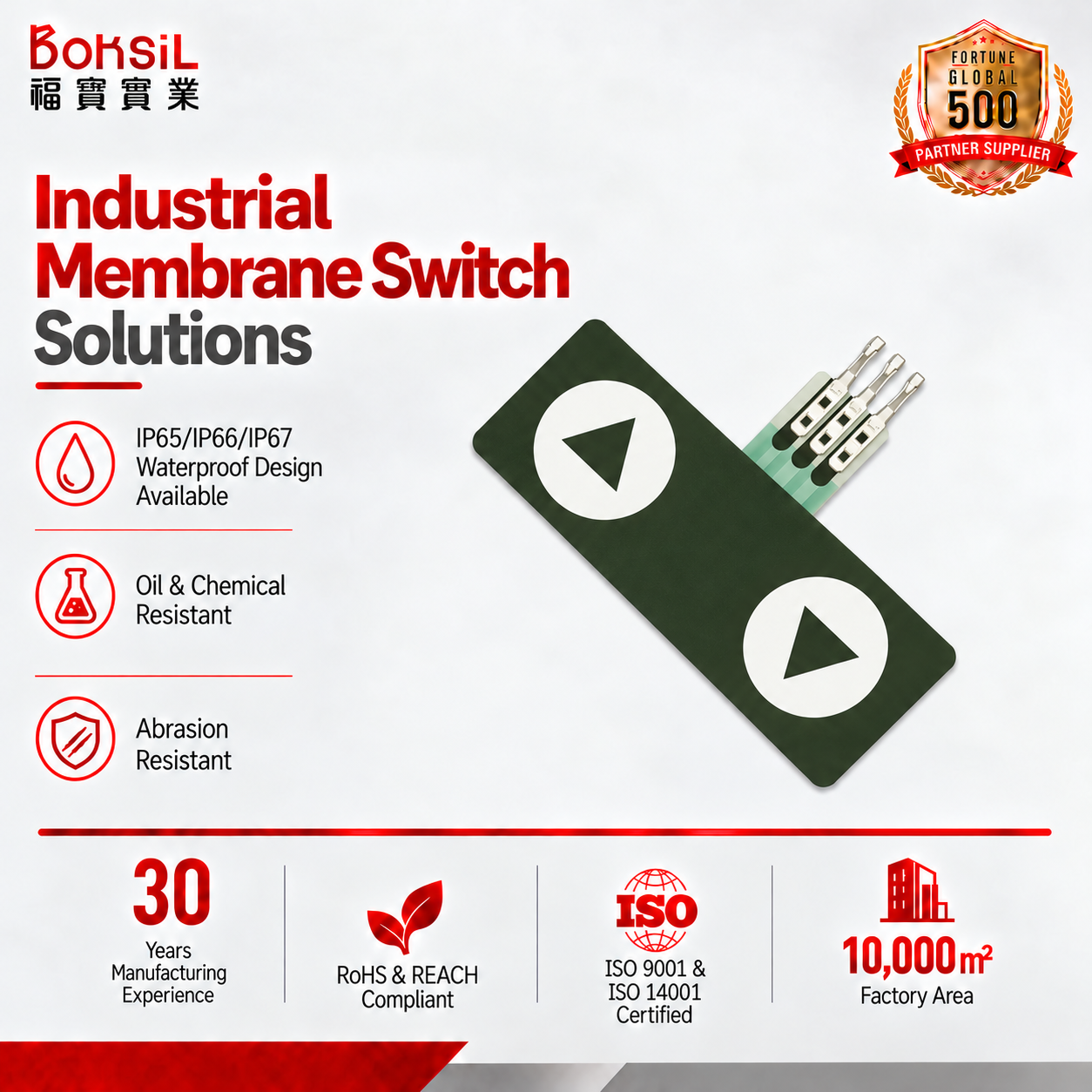
Custom Manufacture 2 Button Membrane Switch Panel with FPC Circuit
- Circuit Core: Polyimide / Copper FPC
- Actuation Life: > 2,000,000 Cycles
- Contact Resistance: < 1.0 Ω Loop
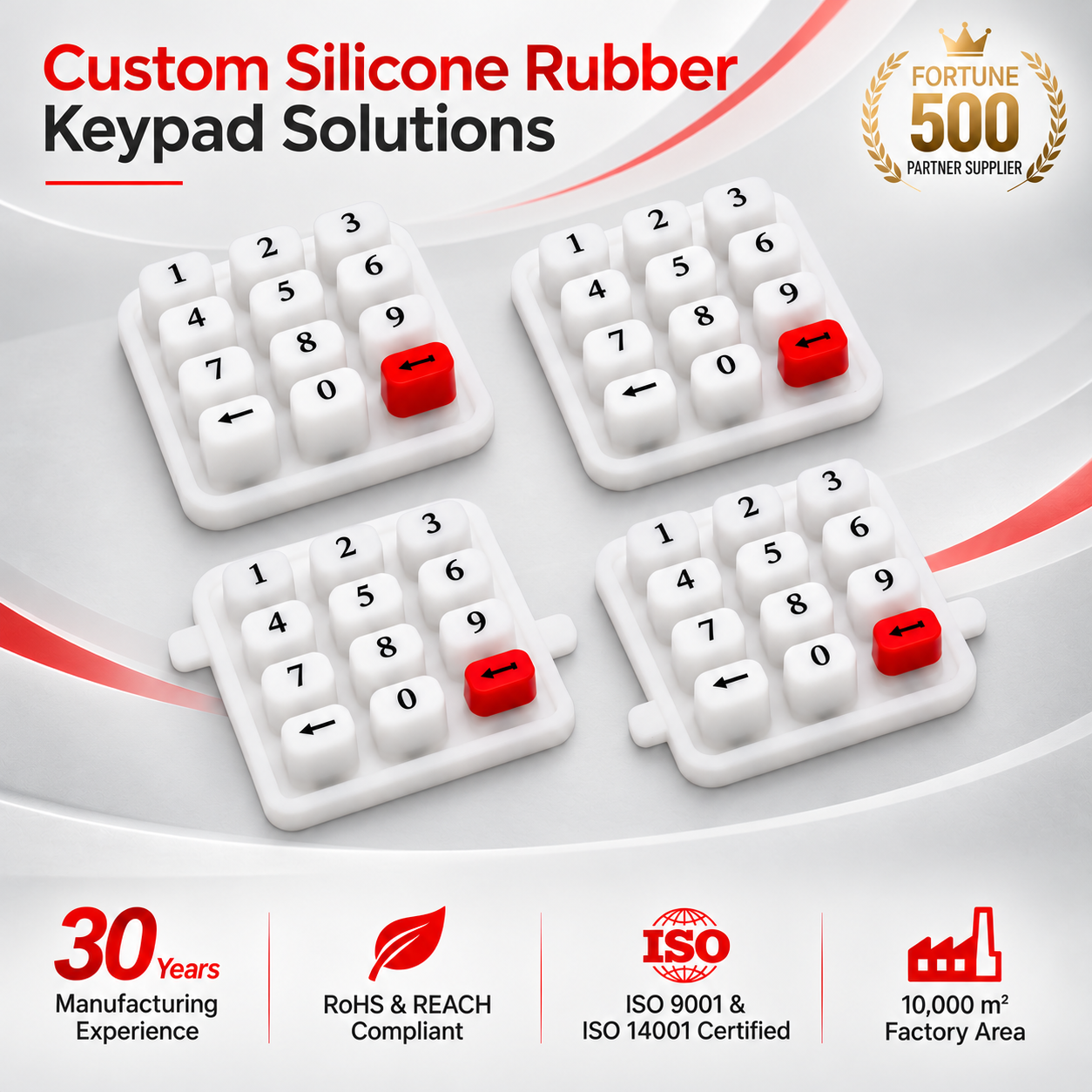
Custom Manufacturer Epoxy Silicone Rubber Keypad OEM Low Profile
- Ingress Rating: IP67 Hermetic Seal
- Key Finish: Abrasion Epoxy Resin
- Tactile Force: 280g ± 30g Snap
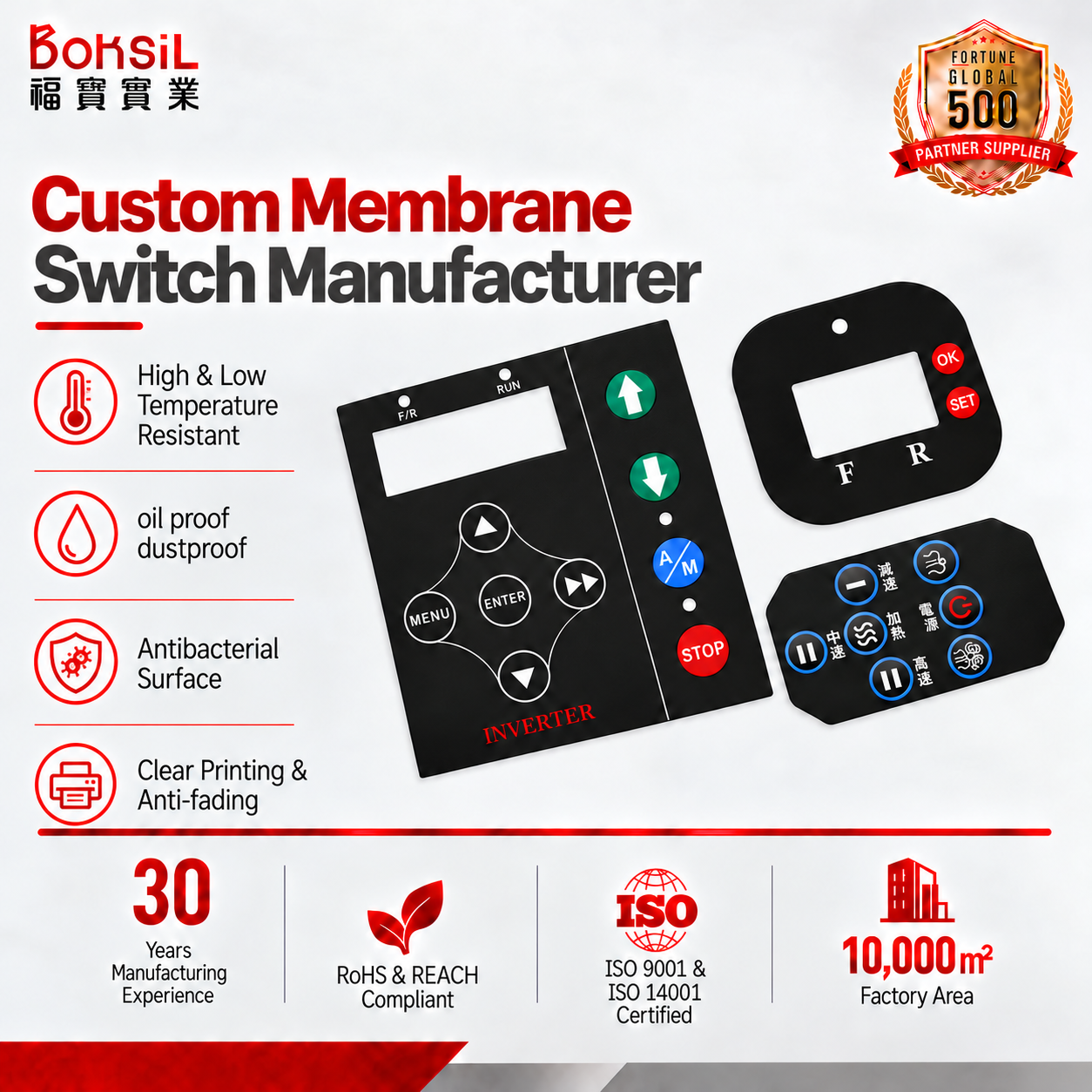
OEM/ODM Factory Front Control Electronic Panel Polycarbonate Switch
- Overlay Base: Lexan™ Polycarbonate
- Adhesive System: 3M 467MP / 468MP
- Operating Temp: -20°C to +70°C
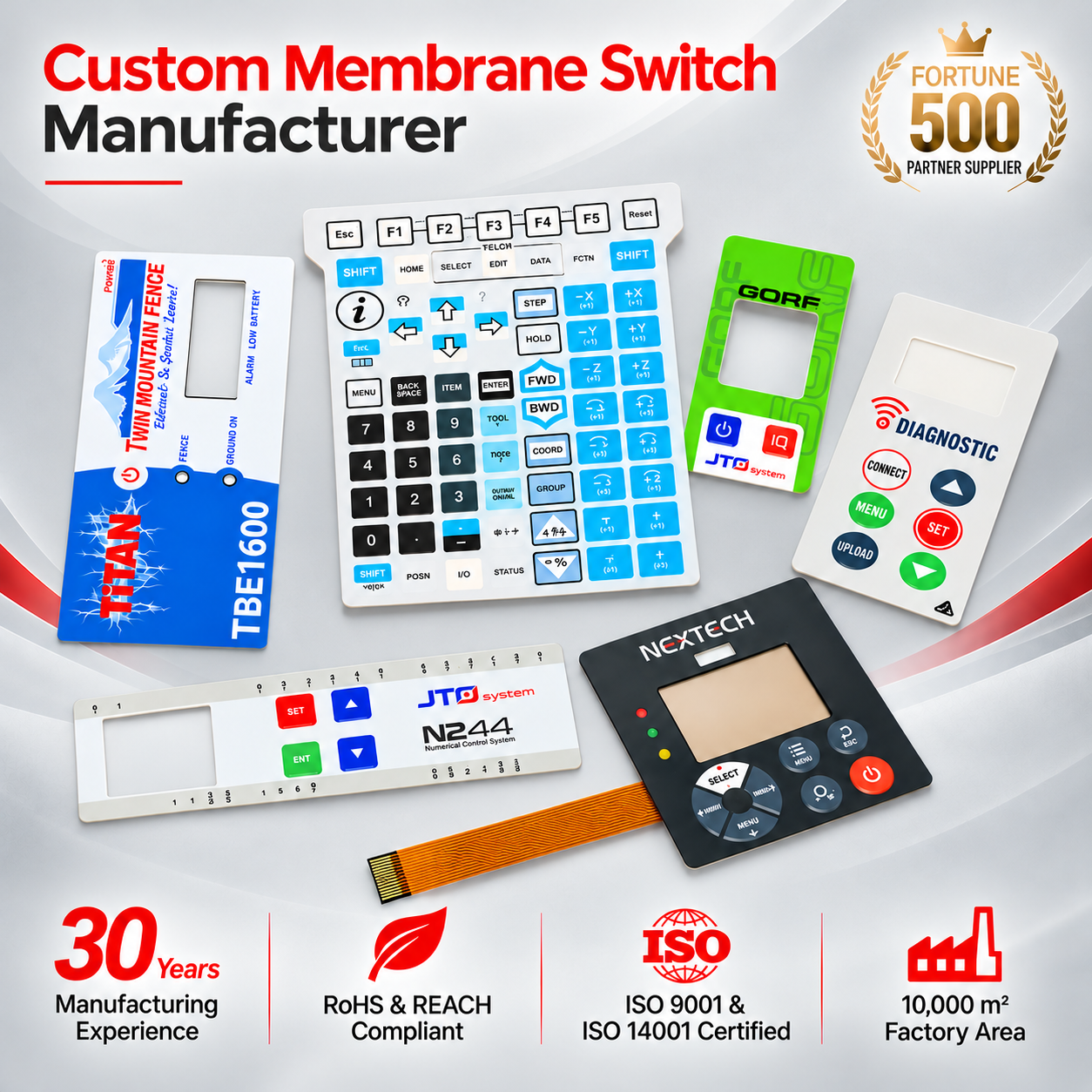
China Factory Direct Membrane Switch Embossed Industrial Panel
- Embossing Style: Rim & Pillow Emboss
- Circuit Paste: Silver & Carbon Overcoat
- Dielectric Isolation: > 500V DC / 100MΩ
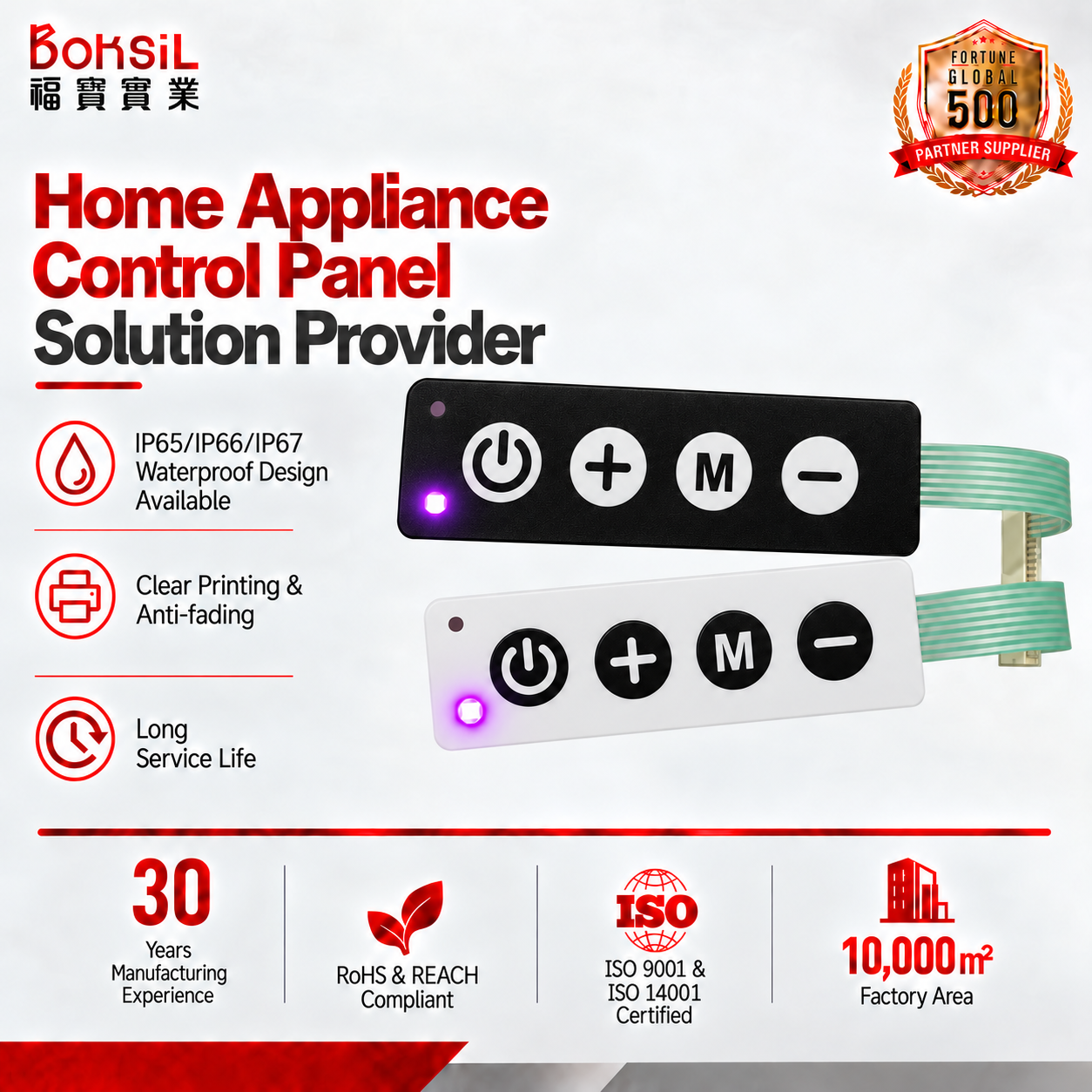
4 Button LED Lights Metal Domes Tactile Membrane Switch
- Indicators: Embedded 0805 SMD LEDs
- Tactile Feedback: Nickel Metal Domes
- Bounce Time: ≤ 5 ms Milliseconds
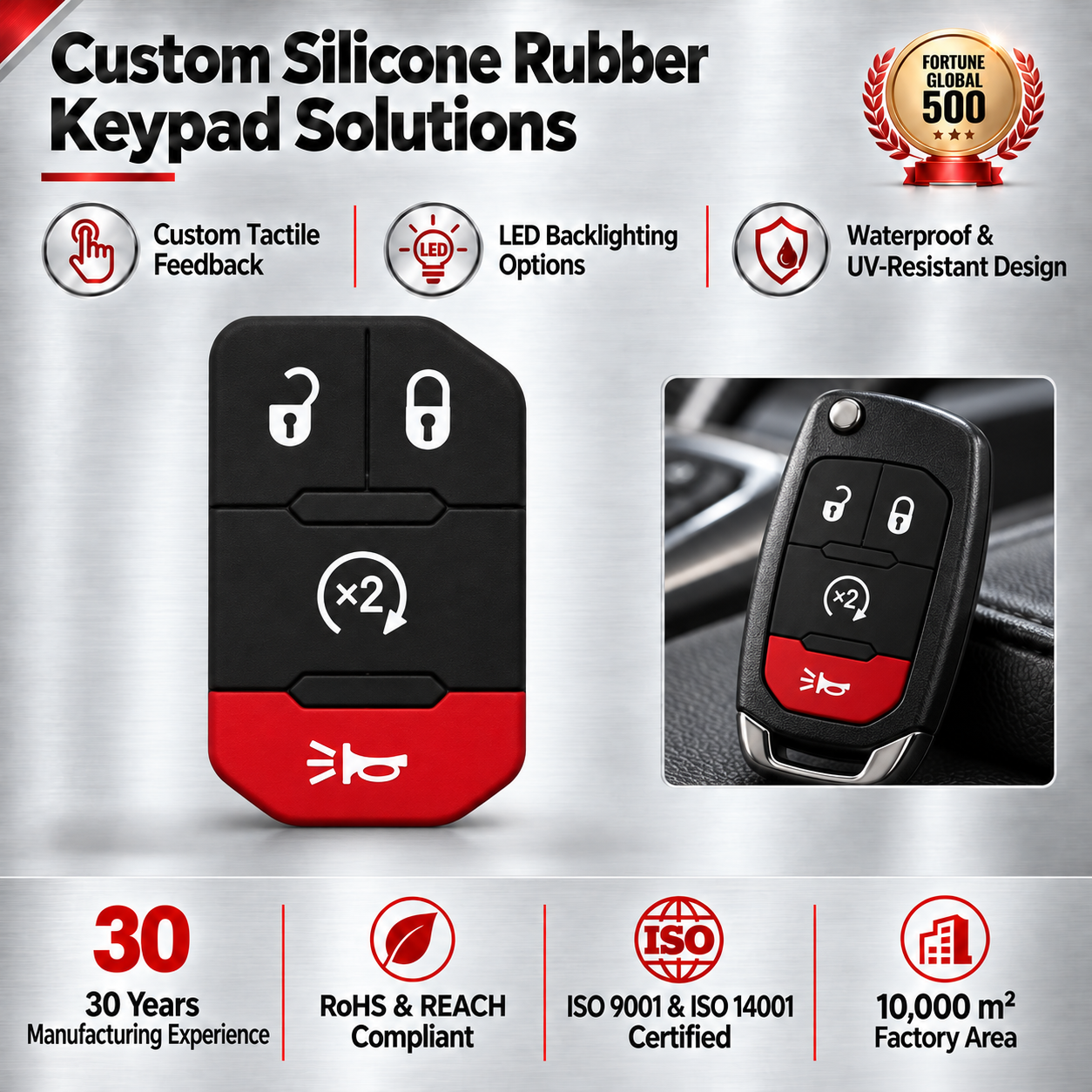
Waterproof Silicone Rubber Keypad 4 Buttons Automotive Wholesale
- Raw Elastomer: High Purity VMQ Silicone
- Contact Resistance: < 50 Ω Carbon Pill
- Environmental: Fuel & Solvent Resistant
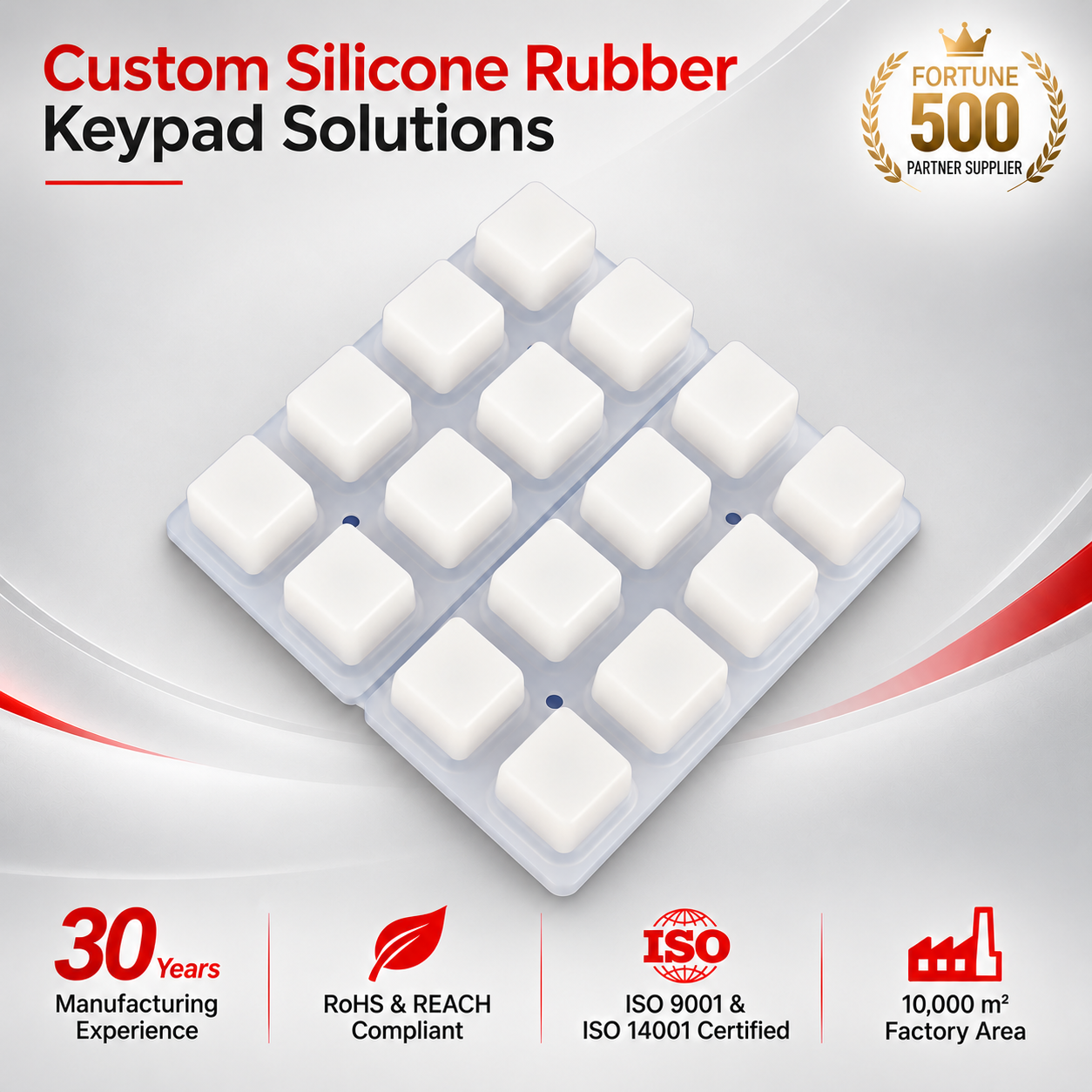
Wholesale Custom Backlit Silicone Rubber Keypad 4x4 Panel
- Backlight Technique: Laser Etched Translucent
- Contact Pill: Low Ohm Gold/Carbon
- Target Market: Telecom & Security HMI
Why European & US Tier-1 OEMs Partner with AXRU
Founded in Dongguan's precision manufacturing hub, Dongguan AXRU Electronics Co., Ltd. operates a vertically integrated 10,000㎡ production facility. On-site verified by Intertek, our facility provides verifiable compliance, stringent trace codes, and zero-defect quality control.
Intertek Audited
Full facility and environmental quality systems independently verified on-site.
In-House Inks & Tooling
Laser plotting, high-density screen formulation, and CNC stamping under one roof.
Advanced Lab Testing
Key life cyclers, climatic chambers, yellowing testers, and force-deflection meters.
Fortune 500 Proven
Trusted Tier-1 component source for medical, automotive, and appliance conglomerates.
Rapid DFM & Samples
Production-intent prototyping in 3–5 working days with full engineering stack-up support.
PET Engineering: Meeting CE & RoHS Industrial Standards
When specifying membrane switches destined for the European single market, material selection dictates mechanical lifespan, chemical compliance, and electrical stability under EU Directives (EMC Directive 2014/30/EU and Low Voltage Directive 2014/35/EU).
| Evaluation Parameter | PET (Polyester - Autotype / Melinex) | PC (Polycarbonate - Lexan) | CE & Industrial Relevance |
|---|---|---|---|
| Flexural Fatigue Life | > 5,000,000 actuations | ~ 100,000 – 300,000 actuations | PET eliminates switch embrittlement and micro-fissuring over heavy-duty service life. |
| Chemical & Solvent Resistance | Immune to IPA, MEK, bleach, detergents, and industrial oils | Susceptible to crazing, clouding, and stress cracking from aromatic hydrocarbons | Essential for medical hygiene wipe-downs and harsh CE Machinery Directive EN 60204-1. |
| Silver Migration Mitigation | High molecular density prevents dendrite growth when carbon-overprinted | Lower surface energy requires specialized barrier lacquers | Avoids high-impedance short-circuits in humid field conditions (CE Low Voltage Directive). |
| Thermal Stability | Continuous operation: -40°C to +85°C; shrinkage < 0.2% at 120°C | Softens near 105°C; higher thermal expansion coefficient | Guarantees dimensional stability for automated surface mount (SMD LEDs) and pitch registration. |
| EMC / ESD Shielding Capacity | Seamlessly couples with printed conductive grids or Al foil laminates | Standard shielding compatibility; higher electrostatic charge buildup | Crucial for meeting EN 61000-4-2 (Electrostatic Discharge up to 15kV air discharge). |
| Environmental Directives | Fully RoHS 3 (EU 2015/863) & REACH (EC 1907/2006) compliant; Halogen-Free | RoHS compliant, but bisphenol-A (BPA) restrictions apply in specific jurisdictions | Simplifies EU Declaration of Conformity (DoC) and environmental risk auditing. |
Anti-Silver Migration Barrier
Under DC electrical bias and humid ambient air, silver particles can dissociate into ions and form dendritic bridges across circuit traces. AXRU prevents silver migration by applying a full encapsulation pass of high-density conductive carbon overcoat, followed by ultraviolet-cured dielectric barrier resin on all PET traces.
Hermetic Perimeter Sealing (IP65/IP67)
For industrial automation and outdoor terminals, ingress protection is engineered by continuous peripheral adhesive gaskets (3M 200MP / 300LSE acrylic systems) and double-layer vented trace paths. Breather vents are routed between switches through hydrophobic acoustic membranes, preventing dust, caustic liquids, and condensation ingress.
Tactile Dynamics & Metal Dome Matrix
Actuation tactile feedback is calibrated using stainless steel snap domes (nickel-plated or gold-plated for low resistance). AXRU matches dome diameter (6mm to 20mm) and snap force (180g to 450g) to the exact embossing profile of the PET overlay. Our automated force-displacement testers certify crisp tactile response exceeding 2,000,000 cycles.
Future Procurement Trends for Industrial Membrane Switches
Strategic sourcing directors face shifting technical specifications, supply chain realignments, and rigorous EU regulatory frameworks. Here is how modern procurement teams are future-proofing their HMI supply chains.
FPC Circuit Hybridization
Procurement teams are migrating high-density pinouts and fine-pitch (0.5mm / 1.0mm) ZIF connections from printed silver-on-polyester to flexible printed copper circuits (FPC). While PET remains standard for overlays and tactile layers, FPC circuits allow direct soldering of ultra-dense micro-controllers, status LEDs, and sensors without conductive epoxy vulnerability.
Capacitive Touch Fusion
Equipment buyers increasingly mandate hybrid control panels: mechanical tactile switches for critical functions (such as E-Stop, Power, or Alarm Reset) combined with smooth capacitive touch sliders and dead-front backlighting for routine parameter adjustment. This eliminates mechanical crevice contamination while maintaining safety ergonomics.
Light Guide Film (LGF) Backlighting
Bulky, power-hungry electroluminescent (EL) foils and uneven multi-LED clusters are being replaced by micro-etched Light Guide Films (LGF). LGF utilizes side-firing SMD LEDs to propagate balanced, razor-sharp uniform luminescence across key legends and brand logos, reducing power draw by up to 70% and device profile to less than 1.2mm total thickness.
Eco-Design & Decarbonization
With EU Corporate Sustainability Due Diligence Directive (CSDDD) enforcement, Tier-1 buyers demand halogen-free conductive pastes, solventless water-based screen printing inks, and circular biaxially-oriented PET substrates. AXRU ensures raw materials comply with zero VOC emissions and non-toxic combustion standards.
Next-Generation Technological Trajectories in PET Switching
The intersection of surface chemistry, optoelectronics, and micro-embossing is elevating the traditional membrane switch into an intelligent human-machine communication system.
Antimicrobial & Chemical Micro-Hardcoats
Medical instruments and food-processing controls require impervious front fascias capable of withstanding relentless clean-in-place (CIP) protocols. New-generation PET films, such as Autotex XE and antibacterial coatings infused with inorganic silver ions, inhibit bacterial colonization (MRSA, E. Coli) according to ISO 22196 while preventing chemical clouding from aggressive sodium hypochlorite and quaternary ammonium wipe-downs.
In-Mold Electronics (IME) & 3D Curvature
Bridging traditional planar graphic overlays and rigid injection moldings, In-Mold Decoration (IMD) and In-Mold Electronics (IME) thermoform printed conductive traces and capacitive sensor patterns directly into structural 3D housings. This eliminates mechanical assembly fasteners, achieves total ingress sealability, and slashes overall unit weight by 40% for automotive cockpits and portable diagnostics.
High-Density Shielding for Medical EMC Compliance
As modern operating rooms and industrial plant floors become saturated with RF noise, membrane switches must function without unintended capacitive crosstalk or radiated susceptibility. AXRU deposits microscopic solid copper or silver-grid EMI attenuation planes directly between the graphic overlay and circuit layers, establishing a low-resistance path to earth ground that passes stringent EN 60601-1-2 medical EMC thresholds.
Frequently Asked Questions for Sourcing & Quality Teams
Direct engineering insights addressing design tolerance, testing metrics, certification documentation, and overseas logistics.
What specific directives govern CE certification for PET membrane switches?
Membrane switches as passive components fall under the European EMC Directive 2014/30/EU (when integrating SMD LEDs, resistors, or active shielding) and the Low Voltage Directive (LVD 2014/35/EU) for circuits above 50V AC / 75V DC. Additionally, full conformity mandates RoHS 3 Directive (EU 2015/863) restricting 10 hazardous substances (lead, cadmium, mercury, phthalates) and REACH Regulation (EC 1907/2006). AXRU supplies official Certificates of Conformity (CoC) and third-party laboratory test reports (SGS/TUV/Intertek) verifying compliance for your CE technical documentation file.
Why choose biaxially oriented PET film instead of polycarbonate for graphic overlays?
Polycarbonate (Lexan) provides high impact strength and ease of forming, but exhibits poor chemical resistance and fractures rapidly when subjected to repetitive switch actuation (fatigue failure typically occurs under 200,000 cycles). Biaxially oriented polyester (PET) offers exceptional flexural endurance exceeding 5,000,000 actuations without work-hardening or cracking. Furthermore, PET resists harsh industrial chemicals, medical disinfectants (isopropyl alcohol, bleach, enzymatic cleaners), and maintains tactile actuation snap when embossed over metal snap domes.
How does AXRU prevent silver migration in high-humidity operating environments?
Silver migration is an electrochemical process where silver conductive traces dissolve under DC voltage bias and moisture, growing microscopic dendritic filaments that cause short-circuits. We mitigate this through three engineered safeguards: 1) applying an impermeable high-grade carbon-graphite overprint across all contact pads and active traces; 2) double-coating non-contact traces with UV-curable, pinhole-free dielectric masks; and 3) utilizing perimeter IP67 adhesive seals (3M 300LSE) to prevent airborne moisture and condensation from infiltrating the circuit chamber.
What is the standard production lead time and minimum order quantity (MOQ)?
Our standard prototype and engineering verification sample turnaround is 3 to 5 business days from 2D/3D drawing sign-off and color match approval (Pantone / RAL). Mass production runs typically ship within 10 to 14 business days. To support both agile hardware startups and Tier-1 OEM service replacement lines, our minimum order quantity starts from just 100 pieces, scaling efficiently to hundreds of thousands of units per month via our high-speed roll-to-roll and semi-automatic flatbed lines.
Which CAD / artwork file formats are required for accurate DFM reviews?
We accept vector graphic layouts in Adobe Illustrator (.AI), CorelDraw (.CDR), or Vector PDF with outlined fonts and explicit Pantone / RAL color designations. For mechanical outlines, hole locations, tail exit routing, and dome coordinates, we require 2D AutoCAD (.DXF, .DWG) or 3D STEP/IGES models for overall enclosure fitment. If you are replacing an obsolete or legacy component, our engineering team can reverse-engineer sample units provided to our Dongguan testing laboratory.
How does AXRU ensure tactile feedback consistency across massive batches?
Tactile feel is governed by the snap ratio between peak actuation force (F1) and contact force (F2). We utilize precision computerized force-displacement testers to plot force-travel curves for every prototype batch, establishing a strict acceptance band (e.g., 280g ± 30g). During volume runs, automated optical inspection (AOI) verifies dome placement accuracy within ±0.05mm, while high-grade stainless steel domes sourced from certified metallurgical suppliers prevent dome fatigue or tactile degradation over millions of cycles.
Ready to Engineer Your Custom CE-Compliant HMI Solution?
Connect with AXRU's senior application engineers. Receive a comprehensive Design for Manufacturability (DFM) review, material stack-up proposal, and itemized factory-direct quotation within 24 hours.