Precision-Engineered Touch Panels & Graphic Assemblies
Direct-from-factory interface solutions manufactured under strict Intertek-verified quality controls.
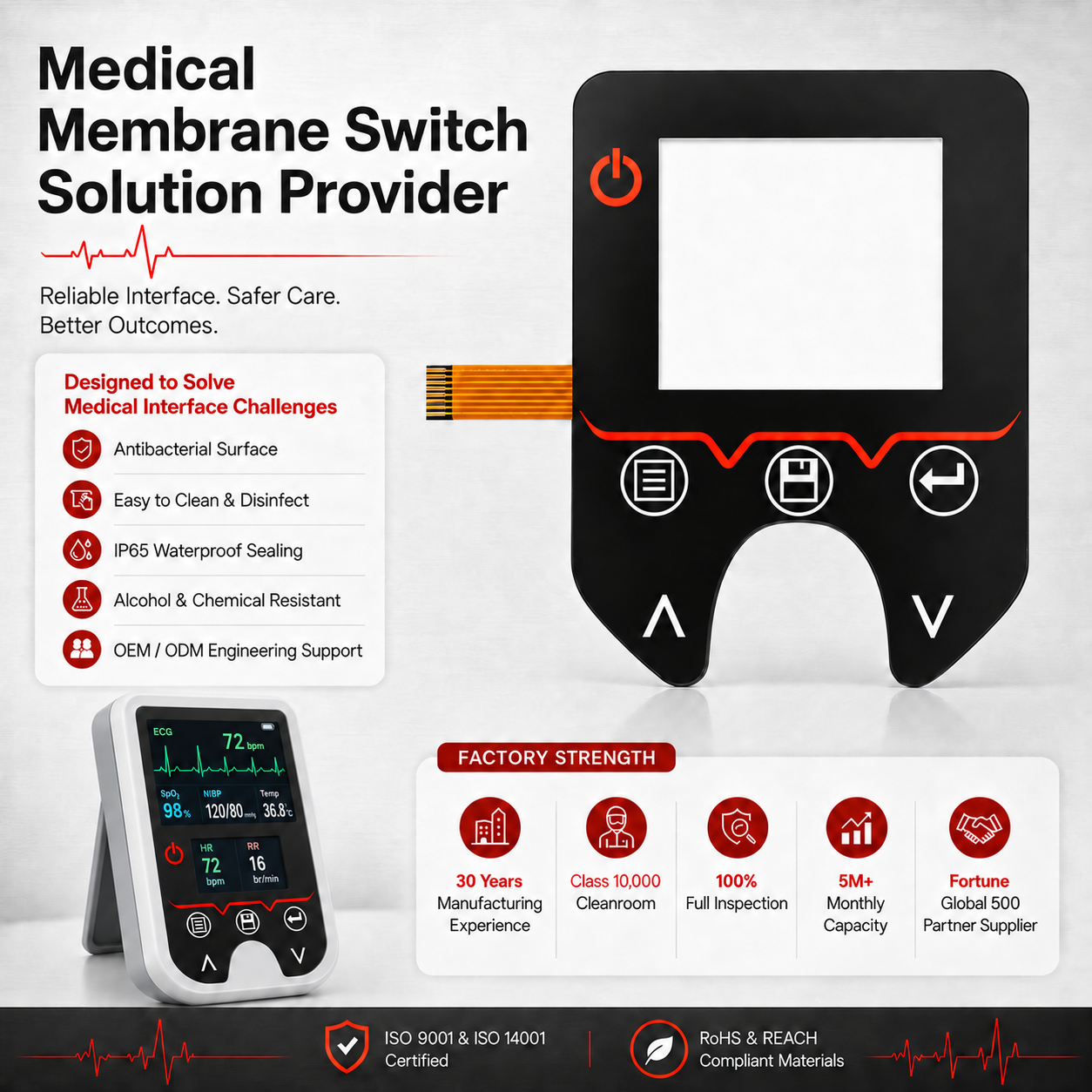
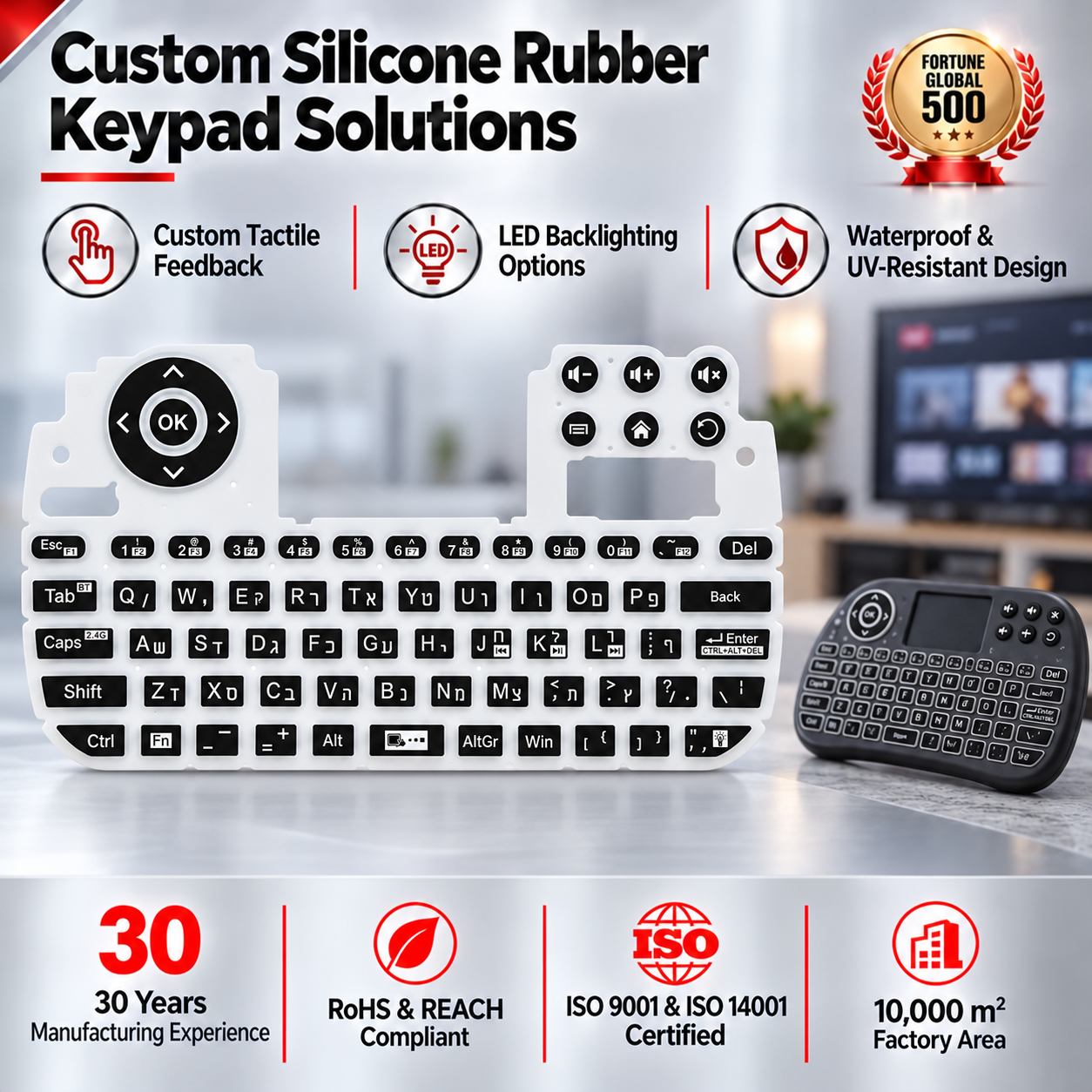
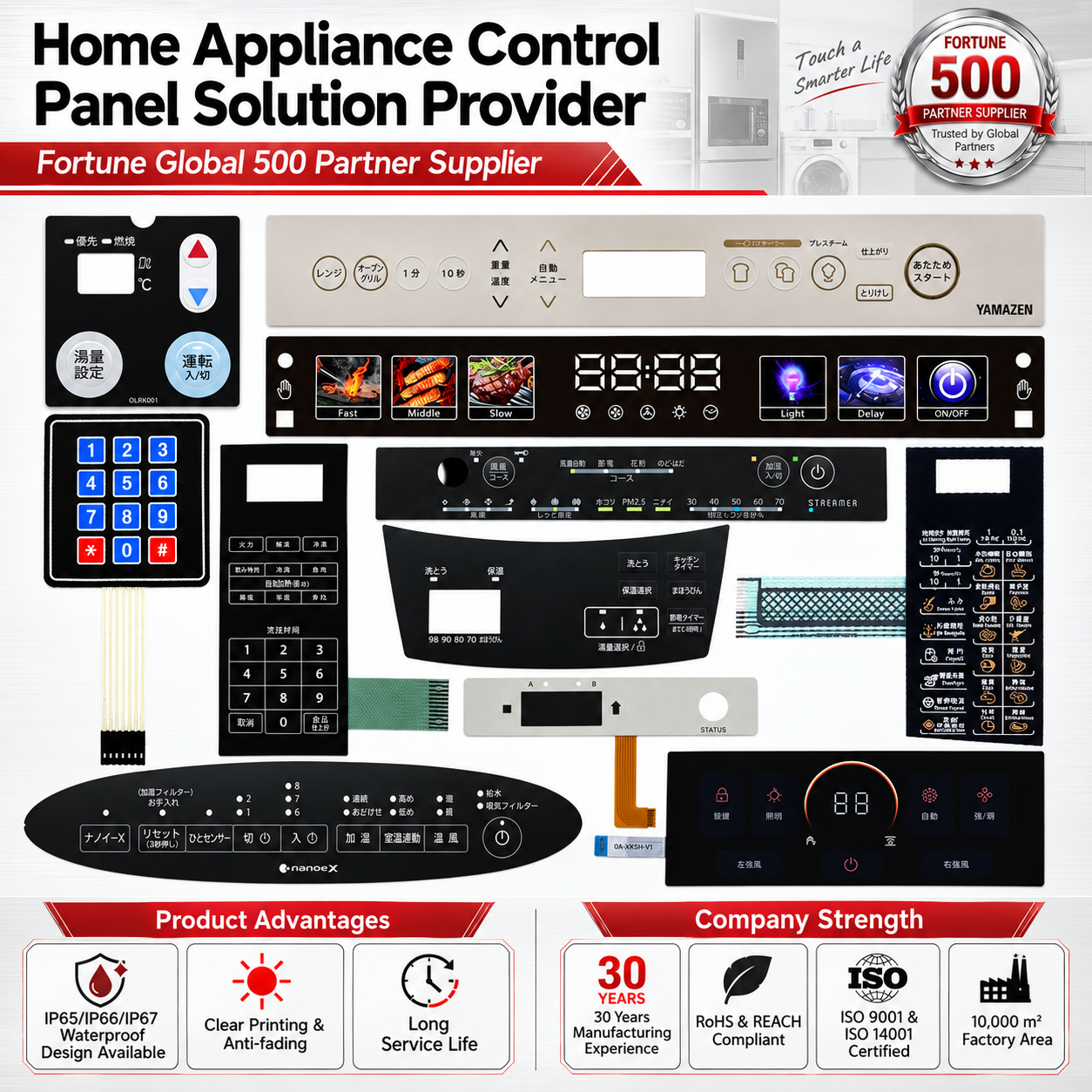
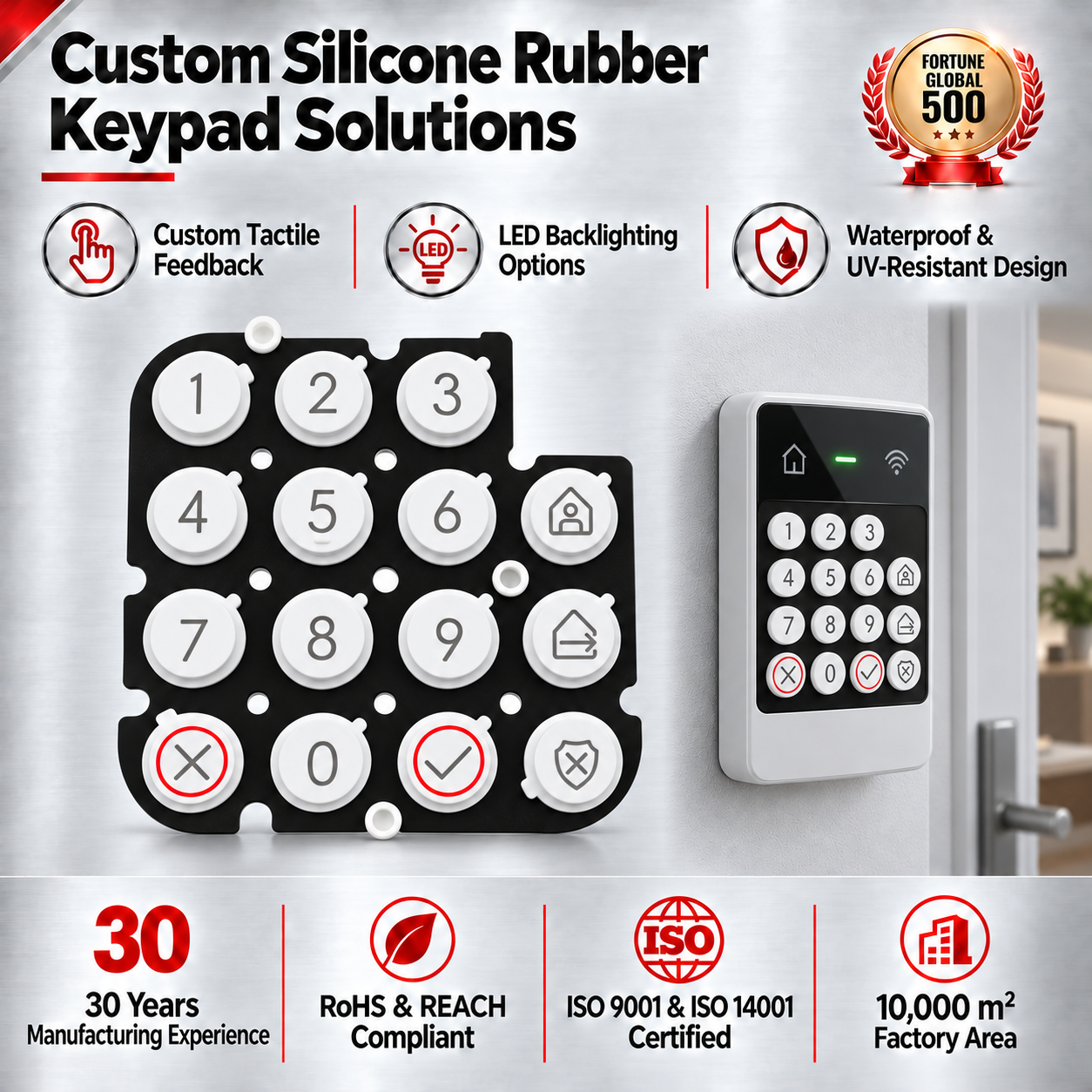
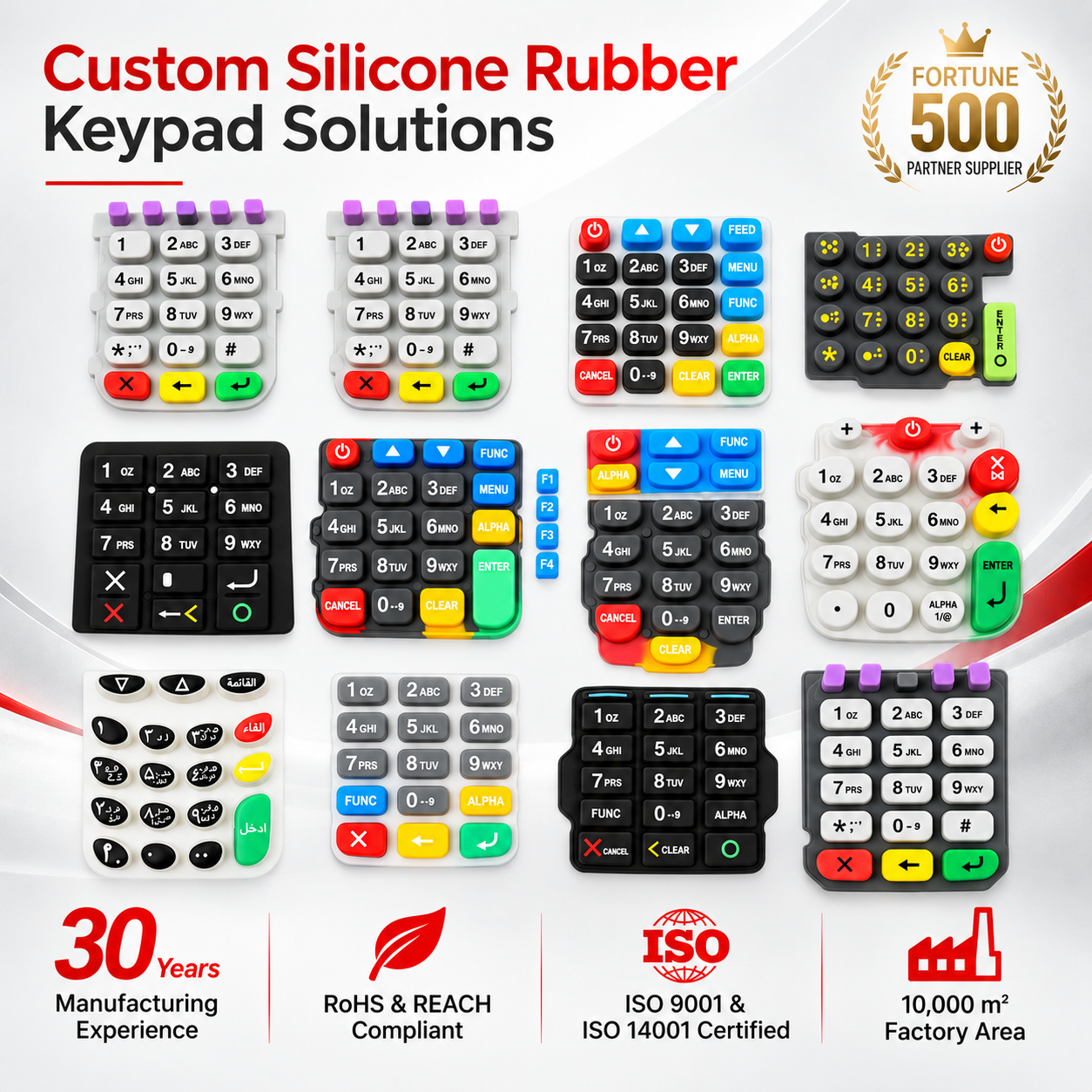
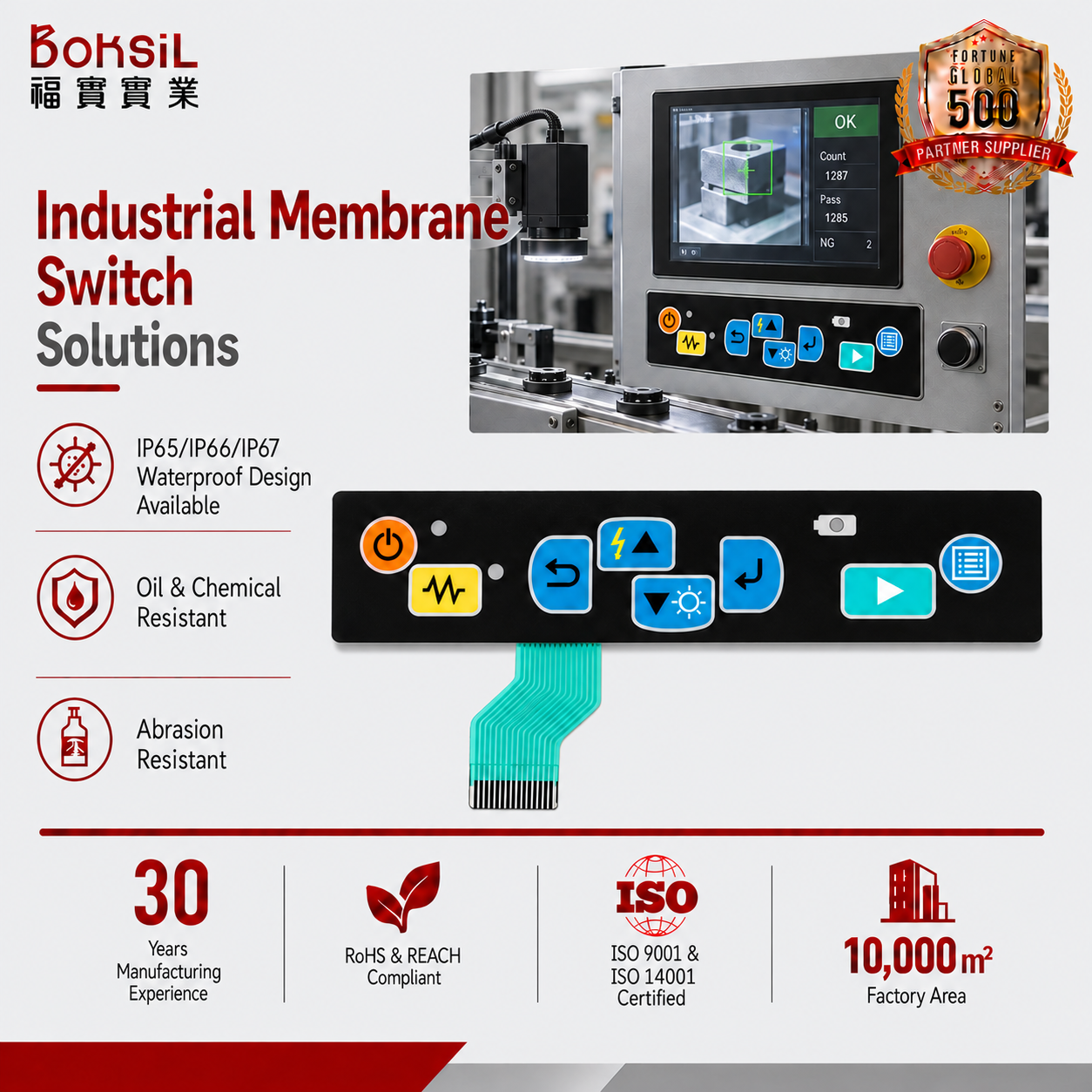
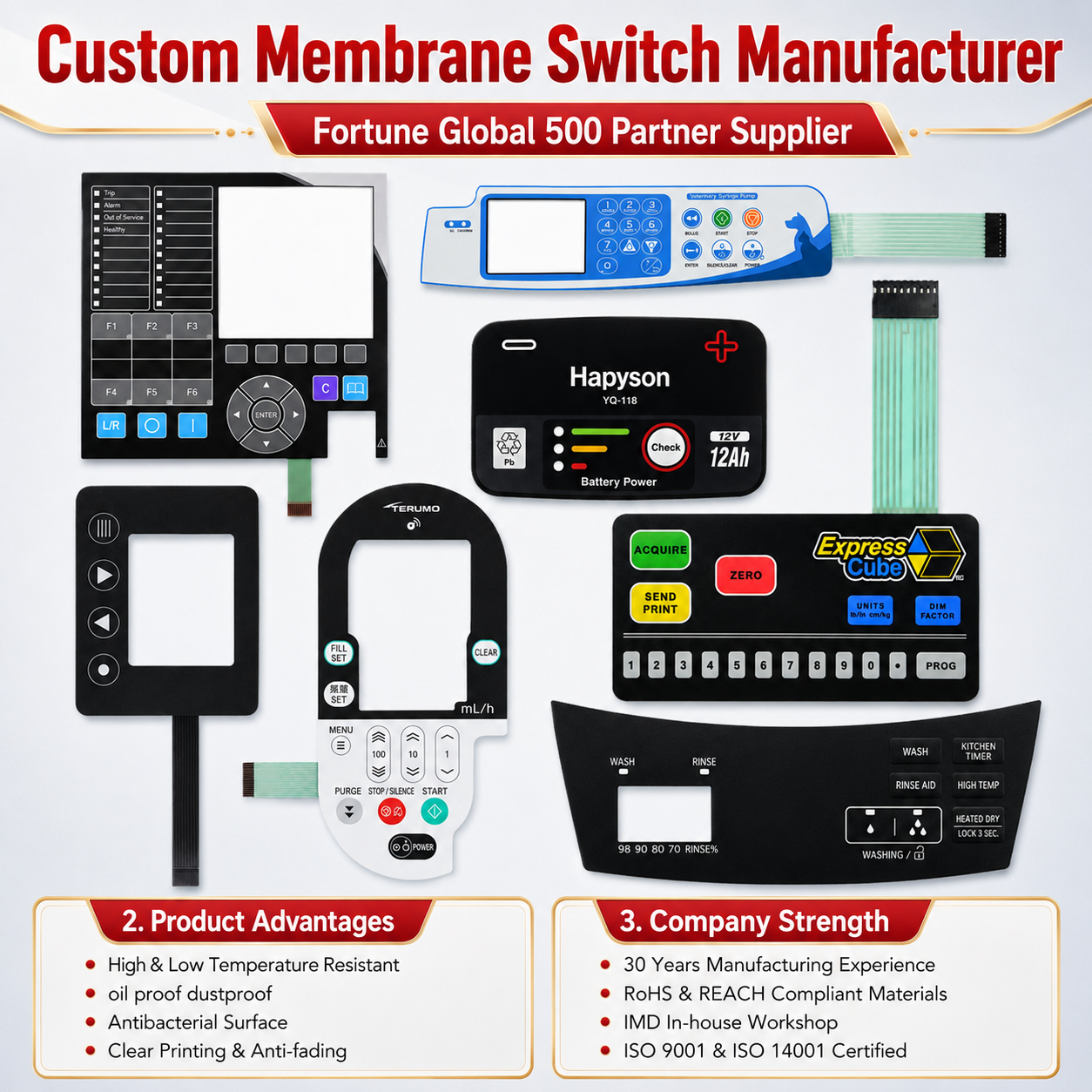
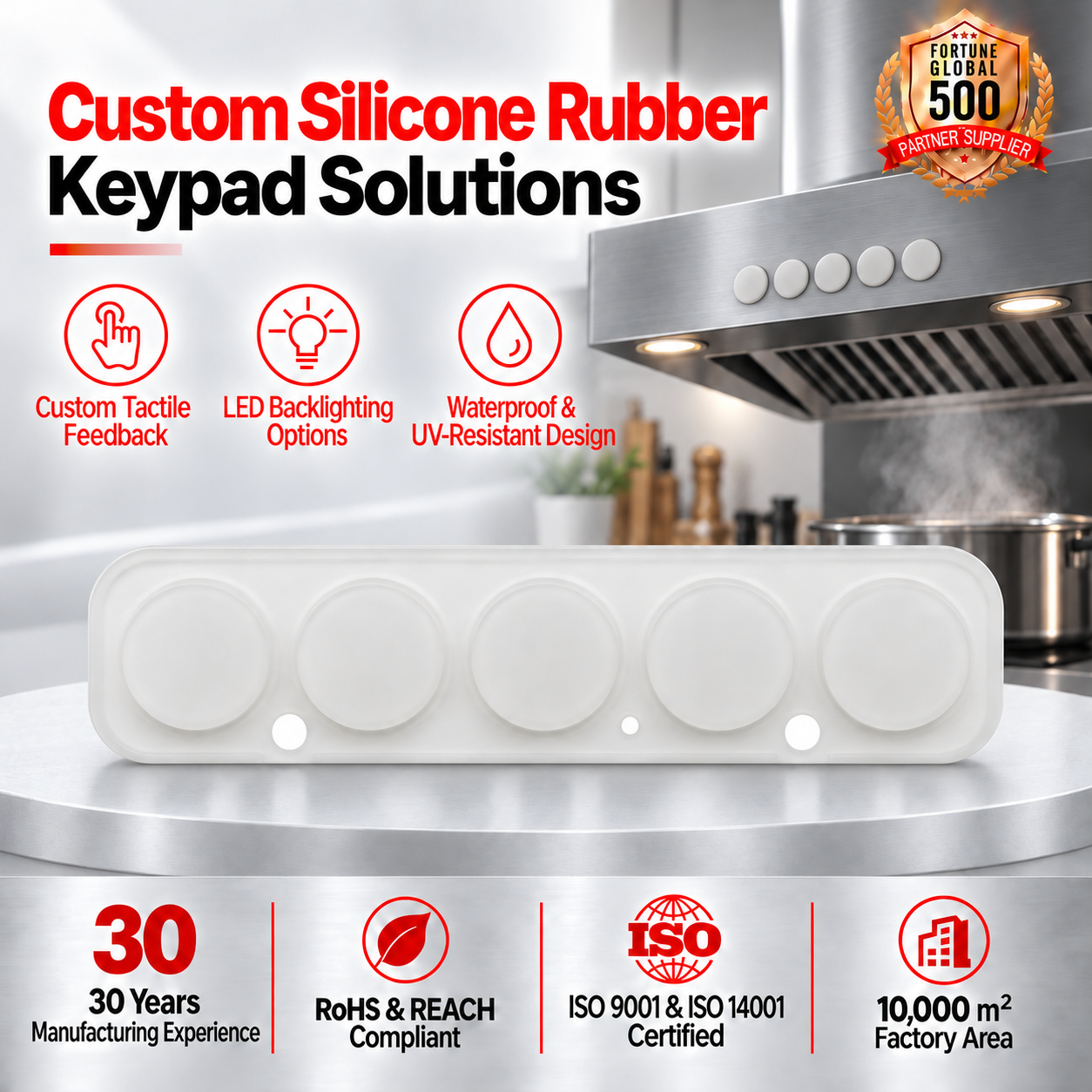
Engineering Overview: High-Integrity Capacitive Touch Architectures
In modern industrial instrumentation, medical electronics, and commercial automation, human-machine interface (HMI) reliability determines entire product lifecycles. Traditional electromechanical switches rely on physical travel and metallic contact closure, inherently introducing mechanical fatigue, ingress vulnerabilities, and oxidation risks. Dongguan AXRU Electronics Co., Ltd. resolves these failure points through advanced solid-state capacitive touch sensors and sealed multi-layer graphic interfaces.
Capacitive touch keypads function via projected capacitance (PCAP) or surface capacitance methodologies. By screen printing high-conductivity silver, PEDOT:PSS, or carbon organo-metallic matrices onto flexible Polyethylene Terephthalate (PET) or photo-etched Polyimide (PI/FPC) substrates, an electrostatic field is generated across discrete sensing pads. Human finger proximity induces a measurable shift in local capacitance (picofarad scale), instantly detected by microcontrollers without requiring physical displacement.
When selecting capacitive touch switches and membrane control front panels for deployment in the European Economic Area (EEA), full compliance with CE Mark Directives—specifically the Electromagnetic Compatibility (EMC) Directive 2014/30/EU, Low Voltage Directive (LVD) 2014/35/EU, and RoHS Directive 2011/65/EU (amended (EU) 2015/863)—is not optional; it is mandatory. Exported assemblies engineered in our 10,000㎡ Dongguan facility undergo comprehensive internal and accredited third-party validation to assure full structural, electrical, and environmental integrity.
Manufacturing Authority & Enterprise Infrastructure
Dongguan AXRU Electronics operates as an Intertek on-site verified production powerhouse with over 12 years of specialized domain expertise. By keeping design verification, screen printing, SMT pick-and-place, die-cutting, environmental chamber stress-testing, and 100% circuit continuity inspection strictly in-house, we eliminate the supply chain fragmentation common among intermediaries.
Intertek On-Site Verified
Our manufacturing workflow, clean-room standards, personnel competency, and material supply chain are regularly audited and accredited by Intertek for complete international transparency.
In-House Reliability Lab
Equipped with automatic force-displacement testers, key life cyclers, programmable temperature/humidity chambers, ink decolorization abrasion rigs, and UV yellowing testers.
End-to-End DFM Support
Direct communication with dedicated bilingual project engineers. We review stack-ups, tail exits, adhesive sheer ratings, and EMC shielding topology before any tooling begins.
Future Procurement Trends in Capacitive Touch Interfaces (2025–2030)
As global hardware developers seek to optimize supply chain risk and accelerate time-to-market, procurement dynamics within the HMI sector are fundamentally shifting. Global B2B buyers no longer evaluate suppliers solely on piece-part quote metrics. Strategic sourcing directors prioritize factories that integrate design agility, regulatory alignment, and technological versatility.
Our market research reveals three prevailing procurement macro-trends:
- Transition Toward Low-Barrier Engineering Prototyping: Tier-1 European and North American developers demand flexible initial MOQs (starting at 100 units) to validate ergonomic and functional software prototypes before committing to mass multi-cavity tooling.
- Consolidated Sub-Assembly Sourcing: Procurement teams increasingly discard standalone graphic overlay and circuit suppliers, choosing vertically integrated vendors that can deliver complete, pre-tested front panel sub-assemblies (overlay + capacitive sensor + acrylic backing + integrated backlighting).
- Traceable Material Provenance: Full RoHS, REACH, and UL 94 flammability traceability are required at incoming component acceptance, particularly for automotive interior cockpits and medical diagnostic systems.
| Evaluation Parameter | Capacitive Touch Keypads | Metal Dome Membrane Switches | Silicone Elastomer Keypads |
|---|---|---|---|
| Mechanical Wear | Zero wear (Solid-State) | 1,000,000 to 5,000,000 Cycles | 500,000 to 1,000,000 Cycles |
| Ingress Protection | IP67 to IP69K (Hermetic Front) | IP65 (Perimeter Gasketed) | IP64 to IP66 (Enclosure Dependent) |
| Tactile Feedback | Haptic/Audio/Visual (Software driven) | Crisp physical snap sensation | Soft rubber displacement travel |
| Surface Cleanability | Flush, wipe-down, zero crevices | Embossed rims can accumulate dust | Raised buttons collect particulates |
| Aesthetic Modernity | Smartphone-like sleek elegance | Functional industrial appearance | Rugged, 3D button feel |
Technological Horizons: Next-Generation Capacitive Keypads
The boundary between traditional flat switches and intelligent interactive surfaces is dissolving. Ongoing engineering innovations at Dongguan AXRU Electronics demonstrate that capacitive interfaces are evolving into active, sensory-rich operational surfaces.
Active Haptic Actuation Integration
By embedding ERM (Eccentric Rotating Mass) vibration motors, Linear Resonant Actuators (LRA), or piezoelectric transducers directly behind the substrate, users receive crisp instantaneous haptic confirmation upon finger contact, bridging the tactile gap.
Advanced Water-Immunity Algorithms
Standard capacitive sensors suffer false triggering when sprayed with saline, water, or oil. Modern firmware-coupled sensors deploy mutual capacitance matrix sensing combined with driven-shield guard rings to ignore standing puddles while responding reliably to a firm press.
In-Mold Decoration (IMD) 3D Geometries
Capacitive touch is no longer limited to flat 2D planes. Combining precision-printed optical-grade films with high-pressure thermoforming and back-injection molding enables sleek, 3D-contoured dashboard consoles with integrated lighting and invisible dead-front graphics.
Procurement FAQ: Sourcing CE Certified Capacitive Switches
Direct technical answers addressing the critical mechanical, electrical, and commercial parameters encountered by global OEM purchasing teams.
How does AXRU ensure capacitive touch keypads pass rigorous CE EMC compliance?
What cover overlay materials and thickness limits work best for capacitive sensing?
What engineering documentation and CAD files are required for DFM and tooling?
Can capacitive touch panels be manufactured for outdoor weather exposure?
What is the typical production timeline from initial prototype to volume container export?
Accelerate Your HMI Design with Verified Experts
Submit your CAD drawings or performance criteria directly to our senior engineering team in Dongguan for a comprehensive DFM audit, impedance validation, and fast quote.