0%

China has a broad base of membrane-keyboard manufacturers, but a polished website alone cannot show how well a supplier controls production. This guide compares companies through practical signals: documented product experience, customization capability, sample quality, and clear communication about materials and testing. Small details matter. A misaligned printed symbol, uneven key feel, or poorly reinforced tail can affect a finished assembly.

Design researcher Donald Norman wrote, “Good design is actually a lot harder to notice than poor design.” His observation is not specific to membrane keyboards, but it offers a useful lens: reliable controls should feel consistent and work without distracting the user. For buyers, that means asking about the circuit layers, PET or other overlay materials, connector options, and inspection steps—not just the quoted price. Requesting a sample can reveal more than a brochure. So can asking how the factory handles artwork revisions or changes in operating conditions.

The manufacturers discussed here should be judged against the needs of each project, not a universal ranking. Some may suit high-volume orders; others may offer more responsive customization. That distinction can be hard to see from public information alone. A comparison table helps, but it cannot replace a technical review, a clear specification, and a real sample. One point deserves caution: a low price may look attractive, yet leave important questions unanswered.
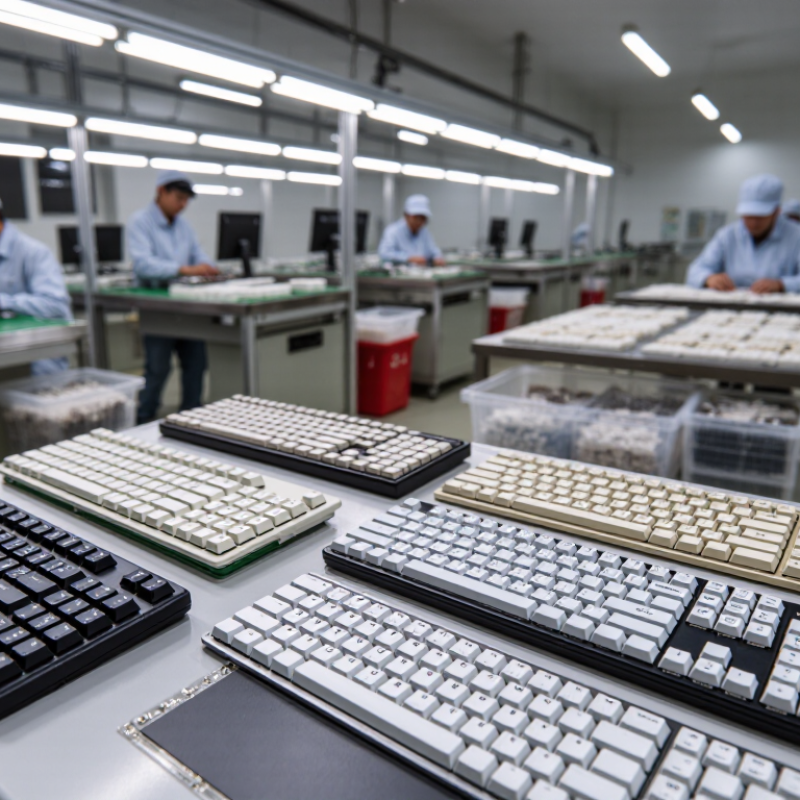
Who Are the Top Membrane Keyboard Manufacturers in China?

What Membrane Keyboards Are and How They Work

A membrane keyboard uses thin, flexible layers instead of separate mechanical switches beneath every key. The top layer carries the printed key labels. Below it, a spacer sheet keeps conductive paths apart until a key is pressed. A flexible circuit layer sits underneath. Simple, but not trivial.

Pressing a key pushes a small contact area through an opening in the spacer, joining two conductive traces. The keyboard’s controller detects the completed circuit and sends the keystroke to the connected device. Many designs add rubber domes, which provide resistance and help the key spring back. The feel depends on dome shape, material, and travel distance; two keyboards can look alike but feel quite different. A light press may be quiet, while a harder press can create a soft, muted tap.

This layered construction can make keyboards thin and relatively easy to manufacture. It also means the typing experience may feel less distinct than that of keyboards with individual mechanical switches. That is not always a drawback. For shared workspaces, a quieter key can be welcome. Dust or liquid may still affect performance, and resistance to either varies by design. A membrane keyboard is not automatically sealed or easy to repair. It is worth checking how the layers are protected, rather than judging only by the key labels.

China’s Membrane Keyboard Manufacturing Landscape

China’s membrane keyboard manufacturing landscape includes component suppliers, printing facilities, tooling shops, and assembly teams. Many projects bring these steps together near major electronics and plastics supply chains. This can shorten communication between design and production. It does not guarantee consistent quality.

A typical assembly uses a printed polyester circuit, spacer layer, graphic overlay, and adhesive backing. Some designs add tactile metal domes beneath selected keys. Small details matter. Ink thickness, dome alignment, and tail positioning can affect feel and electrical contact. Experienced manufacturers review drawings and samples before tooling, then check key response and circuit continuity during production.

Capabilities vary between factories. Some handle prototypes and custom layouts; others are better suited to repeat orders. Buyers should ask how samples are tested, how revisions are recorded, and whether materials are checked against agreed specifications. A glossy sample may look convincing, yet reveal little about long-term wear. Even careful inspection has limits, and adhesive performance can change with heat, moisture, or the mounting surface. That detail is easy to underestimate.

Who Are the Top Membrane Keyboard Manufacturers in China? - China’s Membrane Keyboard Manufacturing Landscape

Landscape Dimension Manufacturing Options and Facts What Buyers Should Verify
Product scope Suppliers may produce membrane switches, keypad assemblies, or complete membrane keyboards. These products can share construction methods but differ in their level of integration. Confirm whether the quotation covers the switch layer only, a finished keypad, or a tested assembly with its cable and electronics.
Graphic overlay Overlays are commonly made from printed polyester (PET) or polycarbonate (PC). Material choice, surface finish, printing, and adhesive depend on the product design and use environment. Request material specifications, approved artwork samples, and testing relevant to cleaning agents, abrasion, and expected use.
Switch construction A typical membrane switch uses printed conductive layers separated by an insulating spacer. Pressing a key brings conductive contacts together to close the circuit. Check the proposed layer stack, circuit design, contact arrangement, and electrical test criteria against the approved drawings.
Tactile feedback Tactile response can be designed using formed overlay features or metal domes. The appropriate construction depends on the required feel, package, and design constraints. Evaluate working samples for actuation feel, key travel, consistency, and suitability for the intended application.
Circuit and connection Depending on the design, the circuit may use printed conductive inks or a flexible printed circuit. Tail and connector configurations are specified to match the host device. Verify connector type, pinout, tail dimensions, electrical limits, and compatibility with the equipment’s control electronics.
Backlighting and indicators Some designs incorporate LEDs or other lighting components, light guides, and translucent graphic areas. These features require consideration of optical layout and electrical integration. Review illumination samples, light uniformity, component placement, power requirements, and performance under the intended viewing conditions.
Environmental design Sealing, adhesives, materials, and edge design can be selected for the intended environment. A sealing or ingress-protection claim applies to a defined design and test condition, not to membrane keyboards as a whole. Ask for the exact test method, sample configuration, and report supporting any environmental or ingress-protection claim.
Quality control Relevant checks may include visual inspection, dimensional verification, circuit continuity, and functional testing. Inspection plans should reflect the product’s drawings and agreed acceptance criteria. Request the inspection plan, sample test records, traceability approach, and process for handling nonconforming product.
Compliance documentation RoHS restricts specified hazardous substances in covered electrical and electronic equipment; REACH governs chemicals in the European Union. ISO 9001 is a quality-management-system standard. Applicability and certification status depend on the product, market, and supplier. Check current certificates and declarations, their scope and validity, and whether the documentation covers the materials and finished product being purchased.
Supplier comparison Manufacturing capability varies by supplier and project. A useful comparison considers design support, process control, sample quality, documentation, communication, and production capacity. Compare suppliers using the same drawings, specifications, sample requirements, forecast, and acceptance criteria rather than relying on general capability claims.

Note: Capabilities and compliance vary by supplier and product. Confirm project-specific details with the manufacturer before placing an order.

Leading Membrane Keyboard Manufacturers in China

Leading membrane keyboard manufacturers in China combine material selection, printing, lamination, and testing under one production process. Their work often begins with a drawing that defines key spacing, tactile response, and the intended environment. A useful supplier can explain how polyester films, adhesive layers, and spacer designs affect feel and durability. Details matter. Ask how samples are checked for circuit continuity, key response, and alignment before approval.

Production capability alone is not enough. Look for clear communication about tooling, minimum order quantities, and changes between prototype and mass production. A well-documented inspection process should identify issues such as uneven printing, trapped dust, or inconsistent adhesive bonding. These defects can be hard to spot in a photograph. Still, no checklist catches everything; real-use testing may reveal a key that feels heavier after repeated presses. That is worth discussing openly. Buyers should compare sample performance, test records, and response times rather than relying on broad claims. A careful manufacturer will explain trade-offs and flag design details that may complicate assembly.

How Chinese Manufacturers Differ in Products and Capabilities

China’s membrane-keyboard manufacturers differ in more than production volume. Some specialize in cost-focused, high-volume assemblies; others manage custom overlays, printed circuits, backlighting, and integrated control panels. The difference becomes visible in a physical sample: legends align beneath the fingertips, adhesive edges lie flat, and connector tails bend without creasing. Small details matter.

Grand View Research’s Membrane Switch Market report estimated the global market at roughly USD 5 billion in 2022, with annual growth projected near 10% through 2030. The figure covers membrane switches broadly, not keyboards alone, so it indicates market demand rather than ranking Chinese manufacturers. Buyers can compare tooling control, print registration, material traceability, and inspection records. Ask for test results on actuation life, contact resistance, and performance after heat or humidity exposure; results depend on the material stack-up. Some suppliers excel at rapid prototypes, while others offer more consistent process control at scale. Not the same thing. A polished sample may not reveal how production batches vary, and that deserves closer scrutiny.

How Chinese Membrane Keyboard Manufacturers Differ

Representative layer counts show how product options can affect construction complexity. Actual designs vary by specification and manufacturer.

A basic stack may include an overlay, two circuit layers, a spacer, and rear adhesive. Backlighting or EMI shielding can add layers or components, depending on the design.

How to Evaluate a Membrane Keyboard Manufacturer in China

A reliable membrane keyboard manufacturer should explain how its design choices affect daily use. Ask about membrane layers, contact materials, spacer thickness, and tail connections. These details influence key feel, electrical stability, and resistance to repeated pressing. Request a sample built with the proposed materials, not just a polished showroom unit. Ask for proof.

Test the sample under realistic conditions. Press frequently used keys repeatedly, check for uneven response, and inspect the printed legends after cleaning. If the keyboard needs a particular actuation force or layout, confirm those requirements in writing. A test report is useful, but ask which methods and sample quantities it covers. Small details matter. A neat sample alone cannot show how consistent a production run will be.

Evaluate the factory’s process, too. Ask how incoming films are checked, how alignment is controlled, and how defects are recorded and corrected. Review a production sample and compare it with the approved reference. Clear answers are more useful than broad promises. Communication during a small trial order can reveal delays or unclear responsibilities. No checklist catches everything, and I would not treat one successful sample as a guarantee. Still, specific records, repeatable tests, and candid explanations offer a stronger basis for choosing a supplier.

FAQS

What layers make up a typical membrane keyboard?

It usually has a printed polyester circuit, spacer layer, graphic overlay, and adhesive backing. Some designs include tactile metal domes.

Which small details can affect key feel?

Ink thickness, dome alignment, and tail positioning can change key response or electrical contact. Small details matter.

How should buyers evaluate a sample?

Check key response, circuit continuity, and alignment. A glossy surface alone tells you little about wear.

Does combining production steps guarantee consistent quality?

No. Some manufacturers manage printing, lamination, and assembly together, but quality still depends on materials and process checks.

What should buyers ask about production changes?

Ask how revisions are recorded, what tooling is needed, and whether prototype changes carry into repeat production. Details can get missed.

How can adhesive performance change over time?

Heat, moisture, and the mounting surface may affect bonding. Real-use testing helps, though inspection cannot catch everything.

What production defects should buyers look for?

Check for uneven printing, trapped dust, and inconsistent adhesive bonding. These issues can be difficult to spot in photographs.

Why compare test records and response times?

They show more than broad capability claims. A key may feel heavier after repeated presses, and that deserves discussion.

Conclusion

This article explains what a Membrane Keyboard is and how its layered construction turns a key press into an electrical signal. It then explores China’s manufacturing landscape, where suppliers vary in production scale, engineering experience, customization options, and the industries they serve. Rather than treating all manufacturers as alike, the article considers how their capabilities can differ across design support, materials, printing, assembly, and quality control.

For buyers comparing potential suppliers, the article outlines practical evaluation points, including experience with similar projects, product consistency, communication, customization flexibility, production capacity, and testing procedures. These considerations can help businesses identify a manufacturer suited to their technical requirements, expected order volume, and delivery needs. The aim is to provide a clear framework for understanding the market and making an informed supplier choice.

Charlotte

Charlotte

Charlotte is a professional marketing specialist with a strong understanding of the company’s products, their practical applications, and the needs they are designed to meet. She regularly contributes expert articles to the company website, sharing clear, useful information that helps readers make......